What is a Bent-axis Motor and How Does It Work?
A Bent-axis Motor is an innovative type of hydraulic motor used in various applications. This motor stands out due to its unique design that incorporates an angled shaft. The bent-axis design allows for efficient power transmission with minimal energy loss. As a result, it is increasingly popular in industries such as automotive, aerospace, and robotics.
Understanding how a Bent-axis Motor works is essential to appreciate its advantages. The motor converts hydraulic energy into mechanical motion. This conversion process involves a rotating shaft that drives multiple pistons. The arrangement enhances torque and speed, making it suitable for demanding tasks. Users often seek motors that maximize efficiency and performance. However, not all applications may fully benefit from this type.
While Bent-axis Motors offer distinct benefits, they are not flawless. Design complexities can lead to challenges in installation and maintenance. Additionally, users should consider the operating environment, as harsh conditions may impact performance. Striking a balance between advantages and limitations is crucial for effective implementation.
What is a Bent-axis Motor: An Overview of Design and Functionality
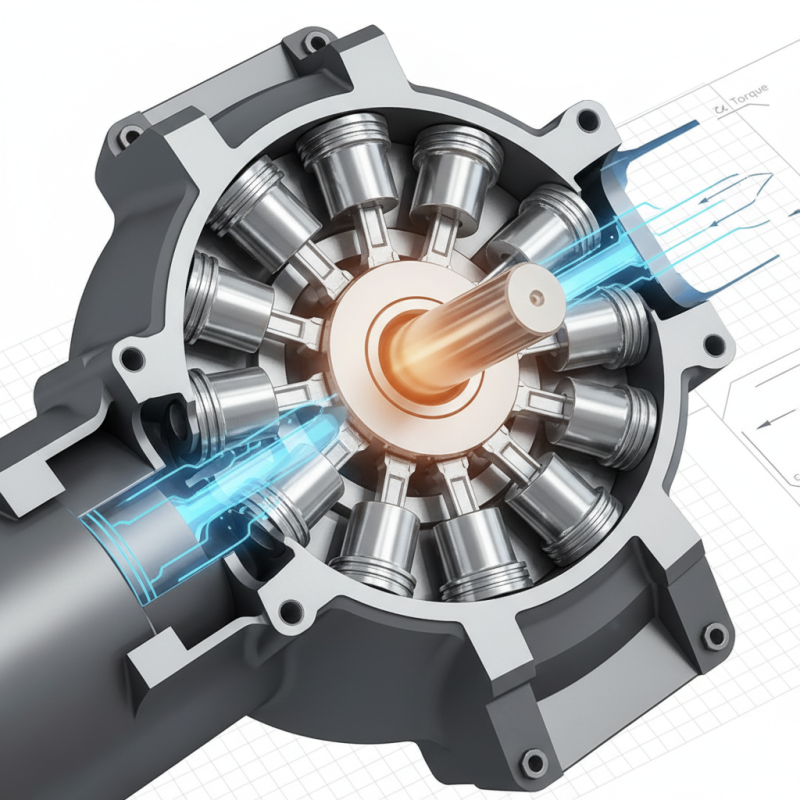
A bent-axis motor is an innovative hydraulic component that plays a significant role in various applications. Its design features a unique configuration where the input drive shaft is set at an angle to the cylinder's axis. This allows for enhanced efficiency, particularly in compact spaces. According to the "Hydraulic Systems Trends Report 2023," these motors can achieve efficiencies of up to 90%. This is notable compared to traditional designs, which often struggle to reach beyond 80%.
The functionality of a bent-axis motor is based on its ability to convert hydraulic energy into mechanical energy efficiently. When hydraulic fluid enters, it pushes against the pistons. These pistons, aligned at an angle, create a rotational motion, resulting in power output. Research indicates that these motors excel in high-pressure environments, handling pressure ratings often exceeding 500 bar. However, their complexity can lead to challenges in maintenance and troubleshooting, an area that needs more attention in industry practices.
Despite their benefits, bent-axis motors are not without drawbacks. The intricate design can lead to higher manufacturing costs. Additionally, they require precise alignment during installation, which is critical for optimal performance. Misalignment could drastically reduce efficiency, highlighting the need for skilled technicians. As the industry evolves, addressing these concerns will be essential to fully leverage the potential of bent-axis motors.
Key Components of Bent-axis Motors: Understanding the Mechanisms
Bent-axis motors are increasingly used in various applications due to their unique design. The key components include a housing, an input shaft, a bent shaft, and pistons. The design allows for efficient power transmission and compact size. This results in higher power density compared to traditional motor types.
The bent shaft design enables the pistons to create force at an angle. This mechanism delivers a continuous motion, making these motors versatile in performance. Reports indicate that bent-axis motors demonstrate efficiency rates above 90%. However, they may require more maintenance compared to other types. The alignment of components can lead to wear over time, necessitating regular inspections.
Understanding the workings of these motors is crucial for optimizing their use. Proper integration into systems can enhance performance. Yet, not all applications benefit equally from bent-axis motors. It's essential to evaluate the specific needs of each application. Balancing efficiency and potential wear remains a challenge for engineers. The pursuit of innovation continues as the industry explores ways to improve durability and maintain efficiency.
Bent-axis Motor Performance Characteristics
Operational Principles: How Bent-axis Motors Convert Motion
Bent-axis motors are fascinating devices known for their unique design. They feature an axis that is not aligned with the rotational axis of the motor. This design allows for a different method of converting rotary motion into linear motion, which can be quite beneficial in various applications. The bent-axis approach maximizes efficiency while offering a compact form factor. It is particularly effective in hydraulic systems.
When a bent-axis motor operates, the pistons inside are positioned at an angle. This angle is key to how the motor functions. As the shaft turns, the pistons move back and forth, generating hydraulic pressure. This movement creates linear motion that can be harnessed for various tasks, such as lifting or driving machinery. The angle of the pistons contributes to the performance, but it can be tricky to optimize. Small adjustments in this angle may lead to significant changes in efficiency.
A common drawback lies in the design complexity. Creating the precise angle for the motor requires careful engineering. If the angle is not just right, efficiency drops. Maintenance can also be a concern. The motors may need regular checks to ensure they function optimally. Users often need to weigh the benefits against the potential for breakdowns and repairs.
Applications of Bent-axis Motors in Industry and Engineering
Bent-axis motors are essential in various industries. They excel in applications that require high efficiency and compact designs. These motors convert hydraulic energy into mechanical motion. Their unique design allows for effective torque transfer. This is crucial in mobile equipment and industrial machinery.
One notable application is in construction equipment. Excavators often use bent-axis motors to drive their hydraulic systems. They provide reliable performance under heavy loads. In manufacturing, these motors enhance precision in automated systems. The small footprint allows for easier integration into tight spaces.
Despite the advantages, there are challenges. Maintenance can be complex, requiring skilled technicians. Additionally, some users report issues with vibration and noise. This needs careful design consideration. Users must balance advantages with potential drawbacks. The effectiveness of bent-axis motors often depends on specific application needs.
What is a Bent-axis Motor and How Does It Work? - Applications of Bent-axis Motors in Industry and Engineering
| Application Area | Description | Advantages | Common Industries |
| Aerospace | Utilized in flight control surfaces and actuation systems. | High precision and reliability. | Aerospace Engineering |
| Automotive | Used in power steering systems for better maneuverability. | Compact design with improved dynamics. | Automotive Industry |
| Manufacturing | Employed in robotic arms and automation processes. | Enhanced torque and speed control. | Manufacturing and Robotics |
| Construction | Applied in heavy machinery for hydraulic systems. | Durability and high-load handling capacity. | Construction Industry |
| Marine | Used in propulsion systems and maneuvering mechanisms. | Excellent performance in harsh environments. | Marine Engineering |
Performance Metrics: Efficiency, Torque, and Speed in Bent-axis Motors
Bent-axis motors are known for their unique design and function. They use an angular arrangement of pistons, which interact with a rotating shaft. This configuration plays a key role in their performance metrics, particularly in terms of efficiency, torque, and speed.
Efficiency in bent-axis motors can vary based on design and operational conditions. When properly calibrated, these motors offer excellent energy conversion rates. However, inefficiencies can arise from friction and heat generation. Managing these factors is crucial for maintaining optimal performance.
Torque is another important metric. Bent-axis motors excel in producing high torque at low speeds. This makes them ideal for heavy-duty applications. However, achieving consistent torque can be challenging under varying load conditions.
Speed is also a critical factor, as bent-axis motors typically operate at lower speeds compared to other types. The trade-off between speed and torque needs careful consideration during design. Addressing these performance metrics is essential for improving the overall effectiveness of bent-axis motors.