
Choosing the China Best PVC Mixer Manufacturer and Supplier requires more than comparing prices or polished website images. A dependable Pvc Mixer should deliver stable blending, practical maintenance, and consistent output across demanding production cycles. Buyers should examine the manufacturer’s engineering experience, factory controls, material selection, and after-sales support before making a decision.
Real performance appears on the factory floor. Watch how the mixer handles PVC powder, additives, and fillers at different loading levels. Check the stainless-steel or coated contact surfaces. Inspect the discharge valve, heating system, gearbox, and safety interlocks closely. Small design details can influence cleaning time and batch consistency. They also affect energy use over several years.
A professional supplier should provide clear technical data, including working volume, motor power, mixing speed, temperature range, and recommended batch size. Trial testing is valuable. Ask for sample results, inspection records, and references from comparable applications. Honest communication matters when the machine needs customization.
No supplier is perfect. Even a strong manufacturer may have limited experience with a specific formulation. That point deserves attention. Buyers should discuss powder behavior, production targets, local electrical standards, spare parts, and operator training before signing an order. A capable Chinese manufacturer will welcome these questions and explain both strengths and limitations. This practical approach helps companies identify a Pvc Mixer supplier that offers dependable equipment, transparent service, and measurable long-term value.
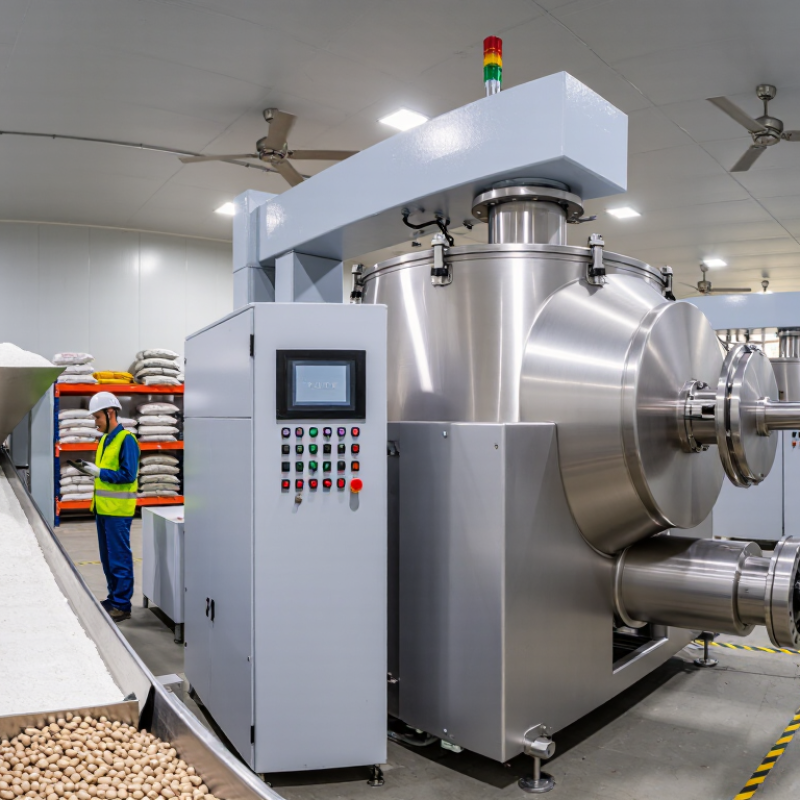
China Best PVC Mixer Manufacturer and Supplier?
PVC resin with a density of 1.30–1.45 g/cm³ affects mixer loading, torque, and heat transfer. A denser batch may require less volume but still create high mechanical resistance. Operators should check bulk density, not rely only on supplier data. Small differences can change feeding behavior.
Temperature control matters. The 160–210°C range is a processing reference, not a universal target. PVC compounds can approach thermal degradation when heating continues without accurate monitoring. Use calibrated sensors, staged heating, and steady rotor speed. Watch for yellowing, sharp odor, rising torque, or uneven fusion. These signs often appear before visible material damage.
Practical trials remain essential. A mixer that performs well with rigid profiles may behave differently with flexible formulations, stabilizers, or fillers. Record batch mass, mixing time, current load, and discharge temperature. We once treated temperature as the main variable and overlooked moisture and feeding order. That was a poor assumption. Better testing compares several settings under identical conditions, then checks dispersion, surface quality, and mechanical performance. Reliable equipment selection depends on these measured results, not impressive specifications alone.
Choosing a PVC mixer manufacturer requires more than checking its stated speed range. For dry-blend production, high-speed mixing commonly operates between 1,000 and 1,500 rpm. This range helps distribute stabilizers, pigments, and processing aids through PVC powder. However, speed alone does not guarantee uniform results.
A practical fill capacity usually sits between 60% and 75% of the working volume. At this level, powder can circulate without excessive dead zones. Lower filling may waste energy and reduce output. Higher filling can increase torque, friction, and discharge difficulty. That balance matters. Operators should also inspect the blade profile, shaft sealing, cooling jacket, and temperature sensors. These details affect daily reliability.
In production trials, the best setting is rarely the fastest one. A mixer running at 1,500 rpm may heat the blend too quickly, especially with sensitive additives. Starting near 1,000 rpm allows technicians to observe powder movement and temperature changes. They can then adjust speed, fill level, and mixing time. One limitation is often overlooked: laboratory results may not match full-scale performance. Material moisture, particle size, and feeding accuracy can change the outcome. Careful testing remains essential.
| Design Dimension | Typical Value or Range | Engineering Relevance |
|---|---|---|
| Mixer Type | Vertical high-speed hot mixer | Commonly used for PVC dry blending, additive dispersion, and controlled heating before cooling. |
| Agitator Speed | 1,000–1,500 rpm | Provides strong shear and rapid circulation; the suitable speed depends on formulation, rotor geometry, and heat sensitivity. |
| Recommended Fill Capacity | 60–75% of effective working volume | Leaves sufficient headspace for powder circulation while maintaining effective contact with the mixing blades. |
| Effective Working Volume | Approximately 60–75% of gross vessel volume | The usable batch volume is lower than the vessel’s geometric volume because free space is required for powder movement and thermal expansion. |
| Typical PVC Dry-Blend Batch Size | About 0.45–0.60 kg per litre of effective volume | Actual batch mass varies with bulk density, filler content, stabilizer package, and powder flowability. |
| Typical Hot-Mix Discharge Temperature | Approximately 110–130°C | The selected discharge point should support additive absorption and fusion preparation without causing premature PVC degradation. |
| Cooling-Mix Discharge Temperature | Commonly below 45–55°C | Lower temperature helps stabilize the dry blend before storage, conveying, or downstream extrusion. |
| Vessel Construction | Stainless-steel or coated carbon-steel contact surfaces | The material selection should consider abrasion, corrosion from additives, cleaning requirements, and product contamination limits. |
| Heating Method | Self-heating from shear, with optional jacket or controlled thermal system | Temperature control is important because excessive heat can increase PVC discoloration and degradation risk. |
| Temperature Measurement | Direct product-temperature probe with programmable setpoints | Product temperature is more useful for process control than relying only on motor load or vessel-wall temperature. |
| Mixing Time | Typically 5–15 minutes per hot-mixing cycle | Cycle time depends on recipe sequence, starting temperature, batch size, rotor design, and target discharge temperature. |
| Drive Configuration | Variable-frequency drive with overload protection | Adjustable speed supports recipe optimization and helps manage torque changes during charging and high-load mixing. |
| Discharge Arrangement | Bottom or side discharge with pneumatic or hydraulic actuation | The outlet should minimize residual powder and connect smoothly to a cooling mixer, storage hopper, or conveying system. |
| Safety Features | Interlocked lid, emergency stop, overload protection, and guarded drive components | Safety functions should prevent operation with an open lid and protect operators from rotating and high-temperature components. |
| Process Verification | Bulk-density, temperature, torque, and dispersion checks | Pilot trials should confirm homogeneity, additive distribution, cycle time, energy demand, and product color stability. |
Choosing the best PVC mixer manufacturer and supplier requires more than comparing price or motor power. Quality standards provide stronger evidence. ISO 9001 shows that the manufacturer controls design, purchasing, production, inspection, and corrective actions. Ask for batch records, calibration dates, and inspection reports. These details reveal whether quality is consistent or only promised.
CE compliance supports access to applicable European markets, but it should not be treated as a decoration. The supplier should provide a Declaration of Conformity, risk assessment, and technical documentation. Check the mixer physically. Guards should cover rotating shafts. Emergency stops should be easy to reach. Electrical cabinets need clear labels and suitable protection. Small details matter.
Process safety is equally important for PVC compounding. A reliable mixer should manage heat, torque, dust, and overload conditions. Temperature sensors must respond accurately near the chamber and discharge area. Interlocks can prevent operation when covers remain open. Ask how operators are trained and how maintenance records are stored. Factory acceptance testing should include an empty run and a material trial.
Experience also brings uncomfortable findings. A polished certificate cannot repair poor housekeeping or unclear wiring. Some inspections still depend too heavily on paperwork. Recheck the machine. Speak with technicians. Review actual service responses. A dependable supplier welcomes these questions and corrects weaknesses before shipment.
Comparing PVC mixer manufacturers requires more than checking the largest advertised output. Ask for tested capacity using your actual resin, additives, and moisture level. A machine rated at 1,000 kg per hour may deliver less with dense formulations. Request batch records, temperature curves, and material samples. Output must remain stable, not only look impressive during a short factory test. Small differences matter when production runs continuously.
Energy use deserves careful measurement. Compare motor power, heating load, cooling demand, and standby consumption per kilogram. A variable-frequency drive can reduce unnecessary power during slower mixing stages. However, automation does not automatically create efficiency. Check whether sensors control temperature, speed, loading, and discharge accurately. The control panel should record alarms and batch data. Simple interfaces are often easier to maintain. Sometimes, too many features create new failure points.
Service can decide whether equipment becomes productive or expensive. Ask about installation guidance, operator training, spare-part availability, and remote troubleshooting. A reliable supplier should provide wiring diagrams, maintenance schedules, and clear warranty terms. Request references from facilities using similar PVC formulations. Inspect the mixer shaft, blades, seals, and cooling system during a factory visit. They reveal more than polished brochures. One weakness remains easy to miss: response time after delivery. A supplier may promise support, yet offer vague holiday coverage or limited technicians. Put those details in writing before comparing prices.
Choosing the Best PVC Mixer Supplier for Profiles, Pipes, and Compounds
Selecting a PVC mixer supplier requires more than comparing prices. Profiles, pipes, and compounds need different mixing behavior. A supplier should understand formulation changes, material moisture, heat history, and production speed. During factory trials, observe whether the mixer produces stable dispersion without burning the PVC. Small details matter.
For profile production, check temperature control, paddle design, and discharge consistency. Pipe compounds may require strong blending for calcium carbonate, stabilizers, and impact modifiers. Compound producers often need flexible batch sizes and repeatable torque readings. Ask for test reports using a formulation similar to yours. Request actual power consumption, cycle time, and output data. Clear evidence matters.
Inspect the supplier’s quality process. Check weld finishing, shaft alignment, insulation, and electrical protection. Ask how spare parts are documented and how technicians respond after installation. Remote support can help, but it cannot replace practical commissioning experience. A reliable supplier should explain limits honestly. No mixer suits every formula. That point is easy to overlook.
Visit the production site if possible. Review machining records, assembly checks, and final trial videos. Speak with existing users, not only sales staff. Some suppliers provide impressive samples but weaker after-sales service. This deserves careful questioning. A written specification should define materials, tolerances, warranty coverage, and acceptance standards before payment.
Typical PVC mixing targets vary by application and formulation. Rigid profiles and pipes commonly use higher hot-mix discharge temperatures, while PVC compounds may require gentler processing to protect additives and heat-sensitive formulations.
Use these values as practical starting points when comparing mixer specifications, temperature-control accuracy, cooling efficiency, and process repeatability. Final settings should be validated against the resin, stabilizer package, filler level, and production line.