How to Choose the Best Photovoltaic Bracket for Your Needs?
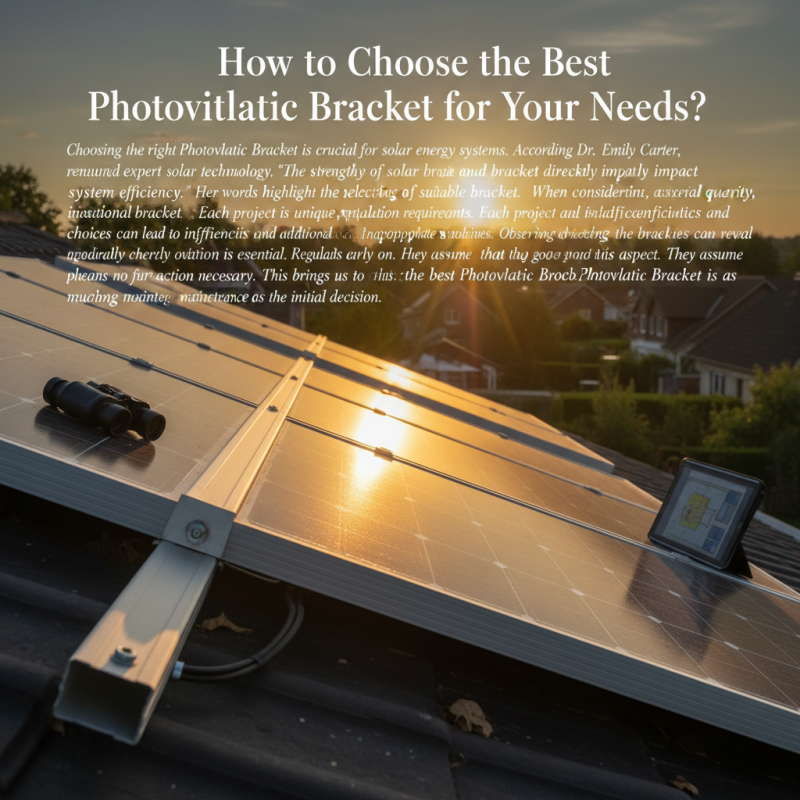
Choosing the right Photovoltaic Bracket is crucial for solar energy systems. According to Dr. Emily Carter, a renowned expert in solar technology, "The strength and durability of the bracket directly impact system efficiency." Her words highlight the importance of selecting a suitable bracket.
When considering a Photovoltaic Bracket, several factors come into play. You need to assess material quality, environmental conditions, and installation requirements. Each project is unique, requiring specific considerations. Inappropriate choices can lead to inefficiencies and additional costs.
Observing a solar installation's performance is essential. Regularly checking the brackets can reveal potential issues early on. However, many overlook this aspect. They assume that a good purchase means no further action is necessary. This brings us to a crucial point: the best Photovoltaic Bracket choice is as much about ongoing maintenance as it is about the initial decision.
Understanding Different Types of Photovoltaic Brackets Available
When selecting a photovoltaic bracket, understanding the different types available is crucial. There are fixed, adjustable, and tracking brackets. Fixed brackets are the simplest. They hold panels at a set angle. They require minimal maintenance. However, they might not capture sunlight efficiently throughout the day.
Adjustable brackets allow for changes in angle. They can optimize energy collection during different seasons. This flexibility is beneficial but can be more challenging to install. On the other hand, tracking brackets follow the sun. They maximize energy capture but can be costlier. Installation complexity is another factor to consider.
Each type has its pros and cons. It’s essential to reflect on your specific needs and environment. Take into account local weather patterns and roof types. Will you need to adjust the brackets frequently, or can you maintain a fixed position? Evaluating these details can make your choice easier.
Factors to Consider When Selecting a Photovoltaic Bracket
When selecting a photovoltaic bracket, various factors come into play. The material of the bracket is crucial. Aluminum and stainless steel are popular for their durability and resistance to corrosion. Reports indicate that aluminum brackets can last over 25 years with proper care, while steel tends to rust, requiring more maintenance.
Another key factor is the load capacity. Ensure the bracket can support the weight of solar panels in all weather conditions. Some brackets may hold up to 200 pounds, which is essential for heavy-duty installations. The installation angle is also significant. A tilt of 30 to 45 degrees optimizes sunlight capture, but the right angle varies by location.
Moreover, consider the installation environment. A coastal area may require specialized coatings to combat salt spray. Many reports suggest that environmental factors contribute to over 20% of bracket failures. Reflecting on these details ensures a more reliable solar system. Choose wisely to avoid future issues, as poor choices can lead to increased costs and safety risks.
Evaluating Material Quality and Durability of Brackets
When selecting a photovoltaic bracket, material quality and durability are critical factors. A recent industry report shows that brackets made from aluminum and stainless steel are more resilient. These materials resist corrosion and withstand harsh weather conditions. Aluminum frames can last up to 25 years, while stainless steel typically offers even greater longevity.
However, not all aluminum is created equal. The thickness and alloy type significantly affect performance. Brackets that use lower-grade aluminum may fail sooner. Testing shows that high-grade aluminum withstands extreme temperatures better. In one field study, brackets using premium materials exhibited less wear and tear over five years compared to standard options.
Durability is more than just materials. The design also plays a role. Some brackets might be easy to install but don’t handle wind loads effectively. Reports indicate that poorly designed brackets can cause panel misalignment after a few seasons. This misalignment can reduce energy efficiency by 10-15%. So, it’s vital to look beyond just the aesthetics or initial cost. Consider the whole lifespan and conditions in which the brackets will operate.
Assessing Compatibility with Various Solar Panel Designs
Selecting the right photovoltaic bracket is crucial for optimal performance. You must consider the compatibility with various solar panel designs. Each design has its unique requirements. Brackets must accommodate different sizes, orientations, and weight distributions of panels.
Research indicates that about 70% of solar panel failures are linked to improper mounting systems. It's essential to match the bracket type with your panel's specifications. A well-fitted bracket can significantly enhance structural stability. In contrast, a poor fit can lead to early wear or even panel damage.
Tips: Always check the manufacturer's guidelines for each solar panel. Flexibility is vital, as a fixed bracket might not suit all designs. Consider adjustable brackets for varying conditions. Regular inspections are crucial. Look for signs of rust or wear that may develop over time. Remember, finding an ideal bracket is not always straightforward. The market offers many options, but not all are reliable. Engage with professionals to assess your specific needs.
Installation and Maintenance Tips for Photovoltaic Brackets
When it comes to installing photovoltaic brackets, proper installation is crucial. Ensure that the brackets can withstand wind loads. Research shows that improper installation can lead to a 30% decrease in system efficiency. Regular checks are necessary. Look for signs of rust or structural damage. These issues can compromise the effectiveness of your solar panel system.
Maintenance plays an essential role too. Clean the brackets regularly to remove dirt and debris. This prevents corrosion. Studies indicate that clean brackets can improve the lifespan of photovoltaic systems by up to 25%. Inspect the connection points at least once a year. Loose connections can lead to energy loss or damage.
Choosing the right hardware matters. Although aluminum brackets are common, sometimes they may not be the best choice in coastal areas due to salt corrosion. Consider your environment. If you're in a high-wind region, thicker brackets may be necessary. Balancing cost with quality is essential. An initial lower investment might lead to greater repairs down the line. Always be proactive in monitoring the system's performance for optimal results.
Photovoltaic Bracket Material Durability Comparison
This chart illustrates the durability ratings of different photovoltaic bracket materials, helping you decide which material might best suit your installation needs.