
How to Choose the Best Oilfield Engines in 2026?
Choosing the best oilfield engines in 2026 requires more than comparing horsepower and purchase prices. Field conditions expose weaknesses quickly. Dust enters air filters, temperatures fall below freezing, and engines may run continuously under heavy loads. A reliable choice must match the equipment, duty cycle, fuel quality, and maintenance capacity at each site.
This guide examines engines used for drilling, pumping, compression, and power generation. It considers torque, fuel efficiency, emissions performance, cooling systems, controls, and service access. A strong engine should start reliably, maintain stable output, and protect critical components during demanding operations. Remote locations make practical support essential. Parts availability, technician training, diagnostic tools, and warranty response can matter as much as laboratory specifications.
Do not trust one number.
A lower fuel consumption figure may look attractive, yet poor performance under variable loads can increase operating costs. Likewise, advanced electronic controls can improve monitoring, but they may require specialized technicians and dependable software support. Buyers should request verified test data, maintenance records, lifecycle cost estimates, and references from comparable oilfield sites. Independent inspections can also reveal problems hidden by polished sales materials.
No selection method is perfect. Market conditions, regulations, and engine technologies continue to change. Some assumptions may become outdated before a long-term project ends. Therefore, decision-makers should review their priorities regularly and document why each model fits the application. The best oilfield engines are not always the newest or most powerful. They are the engines that deliver dependable performance, manageable ownership costs, and responsible operation throughout their working life.
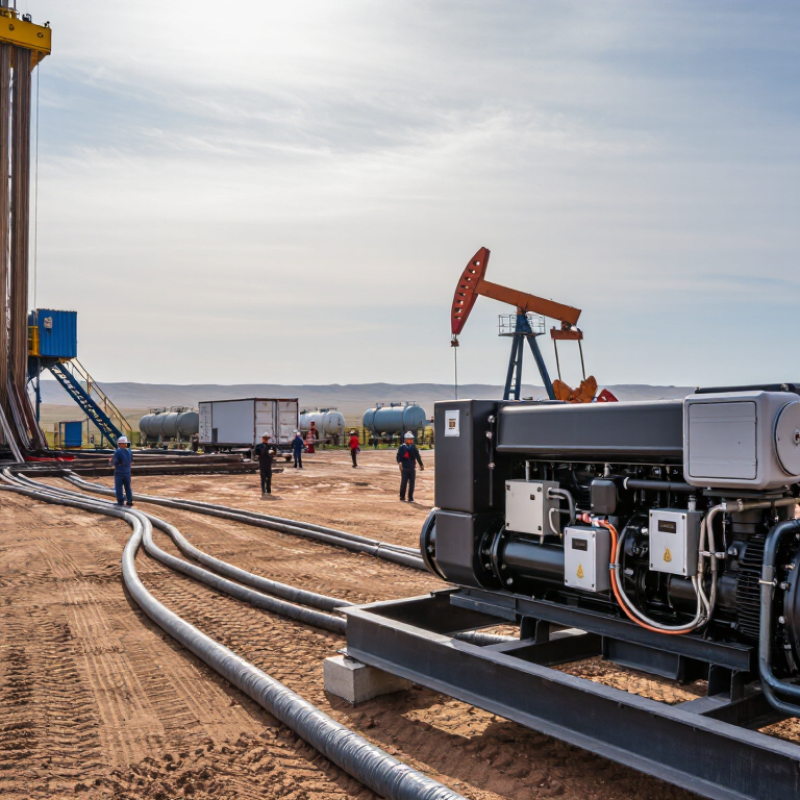
Defining Oilfield Engine Requirements for 2026 Operations
Oilfield engine selection in 2026 should begin with operating requirements, not horsepower alone. Field teams should document load profiles, altitude, ambient temperature, fuel quality, duty cycles, and available service access. A mud pump engine may face sustained heavy loads, while a fracturing unit demands rapid load changes. These are different engineering problems. Small details matter.
The International Energy Agency’s Oil 2024 report projects global oil demand to reach about 105.4 million barrels per day by 2030. That outlook supports continued field activity, but it also increases pressure to improve efficiency and emissions control. The U.S. Environmental Protection Agency states that Tier 4 nonroad diesel standards reduce particulate matter by roughly 50% and nitrogen oxides by up to 80% compared with Tier 3. Therefore, buyers should verify emissions certification, after-treatment temperature requirements, and fuel consumption under real loads.
Maintenance planning deserves equal attention. Specify filtration capacity, oil-drain intervals, cold-start performance, remote monitoring, and critical spare-parts availability. An engine that performs well in a laboratory may struggle beside a dusty well pad at high altitude. This assumption is often wrong. Operators should request field data from comparable applications, not only brochure ratings. The best specification may still need revision after the first operating season.
| Selection Dimension | Recommended 2026 Requirement | Typical Operating Data | Why It Matters in Oilfield Operations | Verification Method |
|---|---|---|---|---|
| Required Power Rating | Choose an engine with sufficient continuous power for the duty cycle, while reserving approximately 10–15% capacity for transient loads. | Approximately 200–2,000 kW for common drilling, pumping, compression, and auxiliary applications. | Prevents overload, unstable speed, excessive exhaust temperature, and shortened engine life during peak demand. | Compare the equipment load profile with the engine’s continuous and intermittent power curves. |
| Duty Cycle | Match the engine to continuous-duty, prime-power, standby, or variable-load operation rather than selecting by peak power alone. | Continuous operation may exceed 6,000–8,000 operating hours annually; standby units may run only during outages or emergency events. | Oilfield equipment often operates for long periods under high load, making continuous-duty ratings more important than short-duration maximum output. | Review the application rating standard, operating schedule, load-factor history, and expected annual hours. |
| Speed and Frequency | Select the speed that matches the driven equipment and electrical system. | Common generator-set speeds are 1,800 rpm for 60 Hz and 1,500 rpm for 50 Hz in four-pole systems. | Correct speed supports stable frequency, lower vibration, and compatibility with pumps, generators, compressors, and mechanical drives. | Confirm rated rpm, frequency, number of poles, coupling speed, and control-system settings. |
| Fuel Type and Quality | Use an engine approved for the locally available fuel grade and expected storage conditions. | High-speed and medium-speed oilfield engines commonly use diesel fuel; fuel sulfur limits depend on the jurisdiction and application. | Fuel quality affects injector life, after-treatment performance, lubricating-oil condition, deposits, and starting reliability. | Check fuel specifications, sulfur content, cetane requirements, water contamination controls, and filtration ratings. |
| Emissions Compliance | Specify the emissions standard required at the operating site before purchasing the engine package. | Requirements may include nitrogen oxides, particulate matter, hydrocarbons, carbon monoxide, and methane or other greenhouse-gas limits. | Non-compliant equipment can face operating restrictions, additional permitting, retrofit costs, or project delays. | Validate the applicable national, regional, state, or local rules and review the engine’s certification documentation. |
| After-Treatment System | Allow space, power, heat management, and maintenance access for diesel oxidation catalysts, diesel particulate filters, selective catalytic reduction, or gas-engine systems where required. | Exhaust after-treatment can require urea solution, regeneration management, temperature control, and additional sensors. | After-treatment performance is essential for meeting emissions limits but can increase system complexity and maintenance requirements. | Review the complete exhaust layout, reagent consumption, regeneration strategy, alarm logic, and service intervals. |
| Altitude Capability | Rate the engine for the actual site elevation or include an approved derating and turbocharging plan. | Power loss may occur at high elevations because air density decreases; the exact derating depends on engine design and calibration. | Insufficient altitude planning can cause reduced power, higher exhaust temperatures, smoke, and poor transient response. | Use the manufacturer’s altitude correction curves and verify the maximum site elevation, ambient pressure, and intake-air temperature. |
| Ambient Temperature | Specify the minimum and maximum ambient temperatures, including hot-soak and cold-start conditions. | Industrial packages may require cold-start provisions below approximately 0°C and enhanced cooling for ambient temperatures above 40°C. | Temperature affects starting, coolant capacity, lubricating-oil viscosity, battery performance, charge-air density, and available power. | Check cold-start ratings, radiator margins, fan selection, heater requirements, and high-temperature derating data. |
| Dust, Sand, and Contamination | Use multi-stage air filtration and sealed electrical components for desert, dusty, or corrosive field locations. | Air filters should be selected for the site’s dust loading and specified service restriction limits. | Dust ingestion accelerates cylinder, turbocharger, and compressor wear and can increase fuel consumption and maintenance frequency. | Define the filtration efficiency, filter area, restriction alarm threshold, enclosure rating, and cleaning or replacement schedule. |
| Load Acceptance | Specify acceptable voltage and frequency recovery after sudden application of large motor or pump loads. | Performance depends on engine inertia, governor response, turbocharger behavior, alternator characteristics, and load-step size. | Fast recovery reduces process interruptions and protects electrically driven pumps, compressors, and drilling systems. | Conduct load-step testing using the project’s actual or representative load profile. |
| Fuel Consumption | Compare fuel consumption at the expected operating load, not only at rated output. | Diesel consumption is commonly evaluated in g/kWh or L/h; consumption generally decreases per unit of power as load increases toward the efficient operating range. | Fuel is often one of the largest operating costs in remote oilfield locations, where transport and storage are difficult. | Request brake-specific fuel-consumption data at 25%, 50%, 75%, and 100% load and model the expected load factor. |
| Lubrication System | Specify oil capacity, oil filtration, oil sampling provisions, and the required lubricant viscosity range. | Oil-drain intervals vary widely with engine design, fuel quality, load, sulfur level, and oil-analysis results. | Effective lubrication control reduces wear, unplanned shutdowns, and maintenance costs during long operating periods. | Review the approved oil specification, sump capacity, filtration system, sampling procedure, and oil-analysis program. |
| Cooling System | Size the radiator, heat exchanger, or remote cooling package for the site’s maximum ambient temperature and fouling conditions. | Cooling capacity must account for jacket-water heat, charge-air heat, lubricating-oil heat, and auxiliary loads. | Overheating can cause derating, shutdowns, head-gasket damage, lubricant degradation, and reduced component life. | Review heat-rejection calculations, coolant flow, fan power, radiator cleanliness margins, and high-temperature test results. |
| Reliability and Availability | Set measurable targets for availability, planned maintenance, emergency response, and critical spare parts. | Target availability should be established from the project’s production and safety requirements rather than using a universal value. | Lost production and remote-site service costs can exceed the initial purchase-price difference between engine packages. | Evaluate historical service data, maintenance intervals, fault records, spare-parts lead times, and local technical support capability. |
| Remote Monitoring | Include digital monitoring for engine speed, load, oil pressure, coolant temperature, exhaust temperature, fuel use, and fault codes. | Modern controllers can support event logging, trend data, alarms, shutdown protection, and secure remote access. | Condition data helps identify overheating, overload, sensor faults, and maintenance needs before they cause unplanned downtime. | Confirm communications protocols, cybersecurity controls, data ownership, alarm priorities, and integration with the site control system. |
| Noise and Vibration | Specify acoustic limits, vibration limits, resilient mounts, exhaust silencers, and enclosure requirements. | Actual levels depend on engine speed, load, enclosure design, foundation stiffness, and distance from the measurement point. | Noise and vibration affect worker safety, nearby communities, instrumentation, structural integrity, and operator comfort. | Use the project’s required measurement standard and test the complete packaged unit at representative load conditions. |
| Safety Systems | Provide independent protection for overspeed, low oil pressure, high coolant temperature, fire, gas detection, and emergency shutdown. | Protection settings should be coordinated with the engine controller, process-control system, and site emergency response plan. | Proper shutdown logic limits equipment damage and reduces risks from fire, explosion, pressure release, and runaway conditions. | Perform a documented cause-and-effect review, emergency-stop test, alarm test, and fail-safe verification. |
| Installation Footprint | Confirm total package dimensions, lifting points, service clearances, ventilation, exhaust routing, and foundation loads. | The engine package must accommodate radiators, silencers, fuel systems, after-treatment, control panels, and maintenance access. | Insufficient space can prevent filter changes, create heat-recirculation problems, and increase installation or maintenance risk. | Approve the general arrangement drawing, lifting plan, foundation design, ventilation calculation, and service-access review. |
| Lifecycle Cost | Evaluate purchase price together with fuel, maintenance, emissions equipment, downtime, transport, spare parts, and disposal costs. | A total-cost model should cover the expected operating life and include fuel-price, utilization, and maintenance assumptions. | A lower initial price may result in higher long-term costs when fuel consumption, downtime, or specialized maintenance is significant. | Compare at least three operating scenarios using consistent load factor, annual hours, fuel cost, service cost, and residual-value assumptions. |
| Planning note: The numerical ranges above are general engineering benchmarks for initial selection. Final engine sizing, emissions compliance, derating, installation design, and safety settings must be confirmed against the applicable project specifications, operating environment, and local regulations. | ||||
Related Posts
-

Top 10 Oilfield Engines Must Know for Enhancing Efficiency and Performance
-
How to Choose the Right Commercial and Industrial Equipment for Your Business
-
Top 5 Gas Compressors for Efficient Energy Solutions in 2023
-

Top Industrial Machines from China for Global Buyers?
-
Top 10 Industrial Gas Compressors You Need to Know About?
-

Top Strategies for Maximizing Efficiency with Machine Shop Tools and Equipment in Modern Manufacturing