What is a CNC Turning Center and How Does It Work?
In today’s manufacturing landscape, the CNC Turning Center stands out as a vital tool. This machine not only enhances precision but also improves efficiency. According to industry expert John Smith, “A CNC Turning Center revolutionizes the way we approach machining.” His words emphasize the impact of this technology.
CNC Turning Centers are designed to perform intricate turns and cuts on metal or other materials. They use computer numerical control to ensure accuracy in dimensions. Jobs that once took hours can now take minutes. However, embracing this technology is not without challenges. Skilled operators are essential to maximize its potential and minimize errors.
Moreover, the learning curve can be steep. New users often face difficulties in programming the machine. Understanding the intricacies of a CNC Turning Center can be overwhelming. Yet, with practice and experience, these machines can transform production lines dramatically. The balance of mastering the technology and leveraging it efficiently remains a critical concern for many manufacturers today.
What is a CNC Turning Center?
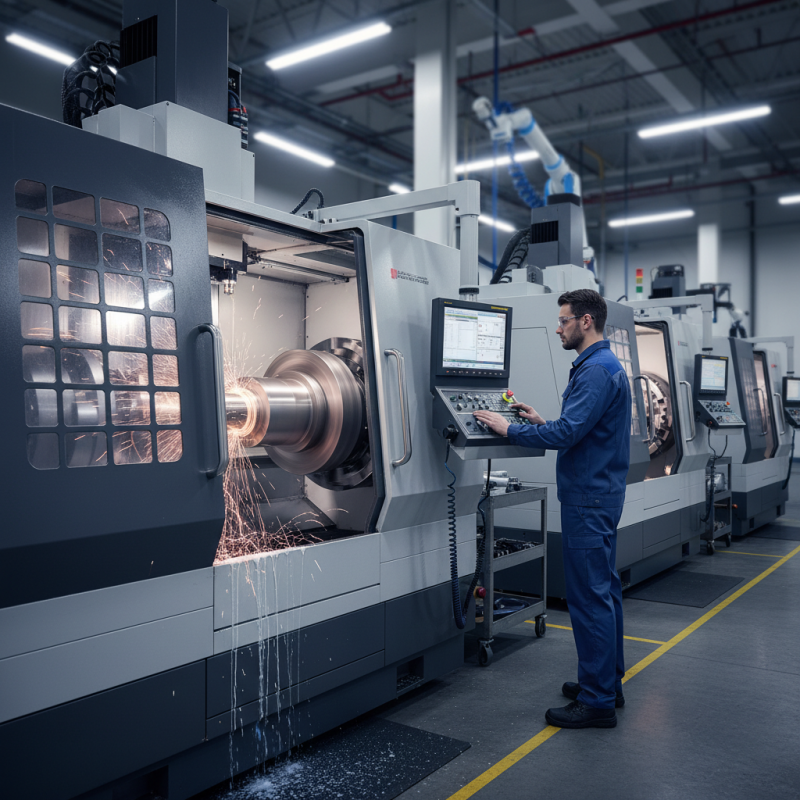
A CNC turning center is a sophisticated machine tool used for shaping materials. It utilizes computer numerical control (CNC) technology to automate the machining process. This type of center primarily focuses on the rotation of the workpiece. As the item spins, various tools cut and shape it into the desired form. The precision of CNC turning centers allows for intricate designs and tight tolerances.
These machines often handle materials like metal, plastic, and wood. Operators input specific parameters into the system. This includes speed, feed rate, and tool type. The CNC system interprets this data, ensuring consistency in the machining process. However, operators need to monitor the machine closely. Minor adjustments may be necessary to maintain quality.
While CNC turning centers excel in efficiency, they do have limitations. Setup time can be significant, especially for complex tasks. Operators may face challenges in programming intricate designs, leading to frustration. Good training is essential. Mistakes can delay production and increase costs, requiring reflection on workflow processes. Balancing automation and human oversight is crucial for success in machining operations.
Key Components of a CNC Turning Center
A CNC turning center is a sophisticated machine tool designed for shaping metal and other materials. Understanding its key components is essential for grasping how it operates. One vital part is the spindle. It holds the workpiece securely while it spins at high speeds. Proper spindle alignment is crucial; an off-center spindle can lead to poor craftsmanship.
Another important component is the tooling system. This system includes various cutting tools that shape the material as it rotates. The right tools must match the material type. Incorrect tooling can result in rough finishes or damaging the workpiece. Tool changers automate this process. They exchange tools without manual intervention, enhancing efficiency but requiring regular maintenance.
Additionally, the control unit drives the entire operation. It interprets computer commands, translating them into precise movements. A malfunction here can halt production. Regular updates and troubleshooting are needed to keep the system running smoothly. The interplay between these parts defines the quality and efficiency of the machining process. Users must be aware of these nuances. Mistakes in setup or maintenance can lead to unexpected setbacks.
What is a CNC Turning Center and How Does It Work? - Key Components of a CNC Turning Center
| Component | Description | Function |
| Spindle | Motor-driven component that rotates the workpiece. | Provides the necessary rotational motion for machining. |
| Tool Holder | Secures cutting tools in place for operation. | Holds the tool securely for accurate cutting. |
| Control System | Electronic system that manages the CNC operations. | Inputs commands and controls machinery movements. |
| Bed | Base of the machine that provides stability. | Supports all machine components and absorbs vibrations. |
| Chuck | Device used to hold the workpiece in place. | Ensures the workpiece remains secure during machining. |
| Coolant System | System to cool and lubricate the cutting area. | Reduces heat and prolongs tool life during operations. |
The CNC Turning Process Explained
CNC turning is a precise manufacturing process. It involves rotating a workpiece while a cutting tool shapes it. This method is highly efficient for producing cylindrical parts. The CNC turning center uses software to control the movements. It allows for complex designs with tight tolerances.
During the CNC turning process, the workpiece is mounted on a spindle. As it spins, the cutting tool moves along the necessary axes. This creates smooth, finished surfaces. Operators need to prepare the machine carefully. Occasionally, programming errors may occur. It's crucial to review and correct these to avoid wasted materials.
The versatility of a CNC turning center is impressive. It can create various shapes, from simple cylinders to intricate components. Still, achieving precision may take practice. Operators must evaluate their parts frequently. Continuous learning and adjustment help in mastering this process.
Applications of CNC Turning Centers in Manufacturing
CNC turning centers play a significant role in various manufacturing applications. These machines excel in creating precision components for industries like automotive and aerospace. They are designed to turn raw materials into finished products with exact specifications. A CNC turning center can automate complex tasks that would take hours manually.
Manufacturers often utilize these centers for mass production. They can produce parts like shafts, gears, and housings efficiently. Each part is crafted with meticulous detail, reducing the risk of human error. However, not every operation is smooth. Sometimes, machine calibration can be off, leading to defects. Workers must frequently check settings to ensure accuracy.
Another application involves prototyping. Rapid prototyping systems benefit from CNC turning’s ability to create complex shapes swiftly. Designers can visualize concepts in a matter of hours. Nonetheless, the initial setup time can be considerable. Adjustments are often necessary, causing delays. The balance between speed and precision remains a constant challenge in the industry.
Advantages of Using CNC Turning Centers over Traditional Methods
CNC turning centers offer several advantages over traditional machining methods. One key benefit is precision. According to a report by the Manufacturing Technology Association, CNC machines can achieve tolerances as tight as ±0.001 inch. This level of accuracy is often challenging for manual processes. Moreover, CNC turning centers operate under computer control, minimizing human error. This leads to consistent and repeatable results, essential in industries like aerospace and medical device manufacturing.
Efficiency is another major factor. CNC turning centers can reduce cycle times significantly. Research shows that companies using CNC technology can increase production speeds by up to 50%. Automated setups improve workflow, allowing operators to manage multiple machines simultaneously. However, this does come with challenges. Initial setup and programming can require substantial time investment. Additionally, while training employees on CNC technology, companies may face a learning curve. Balancing automation with skilled labor is essential for success.
Cost savings are notable, as well. CNC turning centers can lower labor costs through automation. The American Society of Mechanical Engineers states that businesses can reduce labor expenses by 20-30% when switching to CNC systems. Yet, it’s important to consider the upfront investment. Not all companies can afford high-end CNC equipment. Evaluating long-term benefits versus initial costs is crucial for decision-making.