Essential Industrial Shop Equipment Every Business Needs?
In the competitive world of manufacturing and construction, having the right industrial shop equipment can make a significant difference. Every business, regardless of size, relies on specific tools to operate efficiently. This equipment boosts productivity and enhances safety. However, choosing the right tools can be challenging.
Many businesses overlook the essentials or invest in unnecessary items. A compact drill might serve better than an expensive machine that sits unused. Prioritizing crucial tools ensures that operations run smoothly and resources are managed wisely. Sometimes, companies may find that they have redundant equipment. This reflection can lead to smarter purchasing decisions.
It's important to assess what you truly need. A balance of quality and affordability is key. Industrial shop equipment isn’t just about function. It’s also about improving workflow and maintaining safety standards. The right tools can simplify complex tasks, but identifying them requires careful thought and planning.
Essential Tools for Industrial Workspaces: A Comprehensive Overview
Industrial workspaces require a variety of
essential tools to operate efficiently. Hand tools such as wrenches,
screwdrivers, and pliers are fundamental. They support a range of tasks,
from assembly to repairs. Power tools like drills
and saws enhance productivity. However, safety must always come first.
Each tool should be regularly inspected for wear and tear.
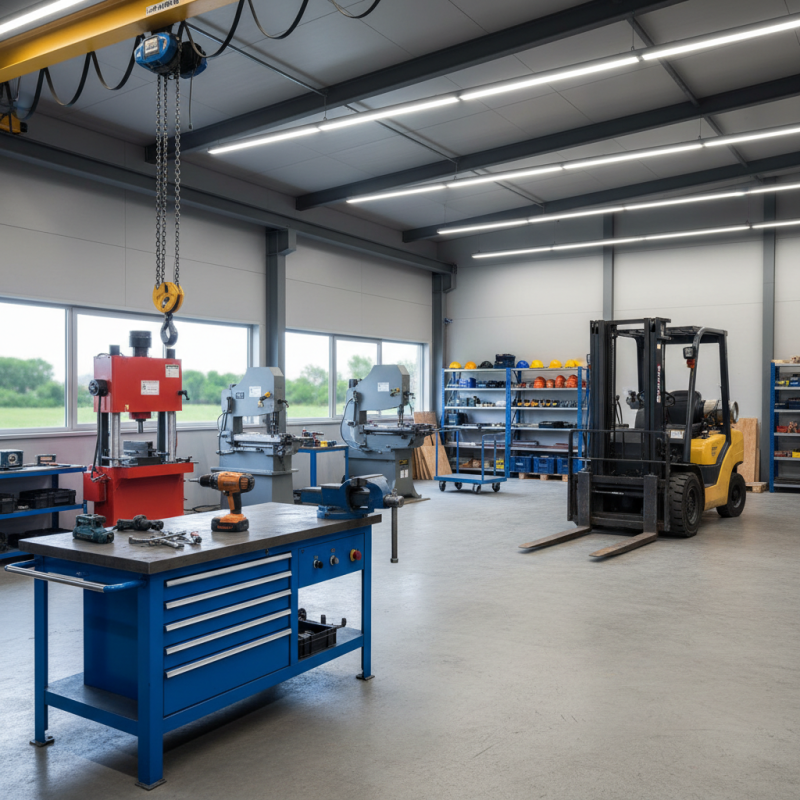
In addition, larger equipment plays a crucial role. Forklifts and pallet jacks
help move heavy items. A well-organized workspace ensures that these tools are accessible. Storage solutions,
like shelves and toolboxes, aid in maintaining order. However, neglecting organization can lead to
inefficiency.
Proper maintenance is essential for all equipment. Regular cleaning
prolongs tool life. It's important to train staff on the use of each tool. Misuse can
lead to accidents. Reflection on tool management and workspace layout can foster improvement.
Emphasizing safety, organization,
and proper training contributes to a functional workspace.
Key Safety Equipment for Industrial Shops: Protecting Workers and Assets
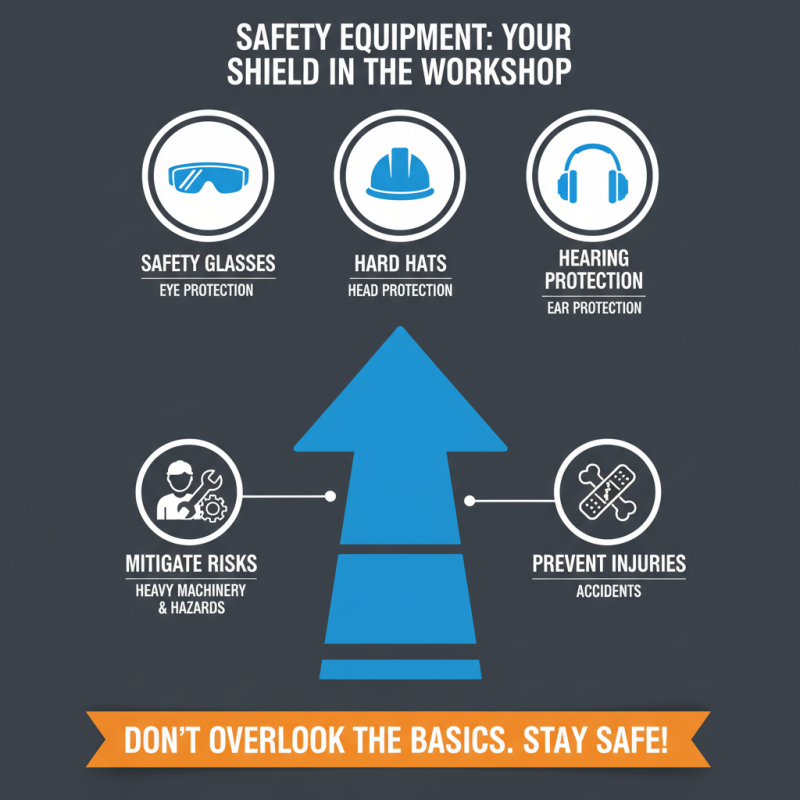
In any industrial shop, safety equipment is essential for protecting workers and assets. Safety glasses, hard hats, and hearing protection are just a few examples. These items help mitigate risks associated with heavy machinery and hazardous conditions. Workers often overlook the importance of these basic tools. However, their absence can result in severe injuries or accidents.
Fire extinguishers and first aid kits must also be readily available. Many shops fail to maintain these critical resources. Fire hazards are common, especially when flammable materials are present. Regular maintenance checks for this equipment are necessary. A single oversight can lead to disaster. Training workers on emergency procedures adds another layer of security.
Another area needing reflection is ergonomic safety. Workstations often lack proper design, leading to strain injuries. Simple adjustments can improve comfort and productivity. Employers should encourage feedback from staff about their working conditions. This practice creates a culture of safety. It also emphasizes that safety is everyone's responsibility, not just management’s.
Must-Have Machinery for Efficient Production in Industrial Settings
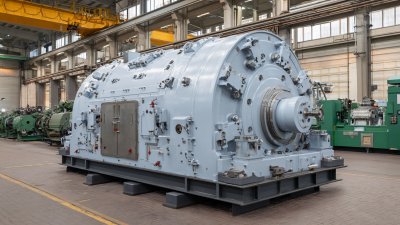
In an industrial setting, having the right machinery is essential for smooth operations. Critical equipment includes lathes, milling machines, and welding tools. These machines help create precision parts vital for various manufacturing processes. Investing in quality machinery can streamline production and reduce errors. But, not all businesses consider maintenance until it's too late, leading to unexpected downtimes.
Forklifts and pallet jacks are also indispensable. They facilitate the movement of heavy materials, saving time and reducing injury risks. However, training staff and staying compliant with safety standards can be challenging. Many businesses overlook the importance of regular training, which can lead to accidents. Inadequate equipment selection may also hamper productivity.
Air compressors and CNC machines are worth mentioning as well. They enhance efficiency and precision in production. However, companies sometimes struggle to choose the right specifications for their needs. This oversight can lead to equipment that underperforms for specific tasks. Thus, evaluating operational needs carefully is vital. Striking the right balance between equipment quality and cost should prompt regular assessments.
Storage Solutions: Organizing Equipment and Inventory in Industrial Shops
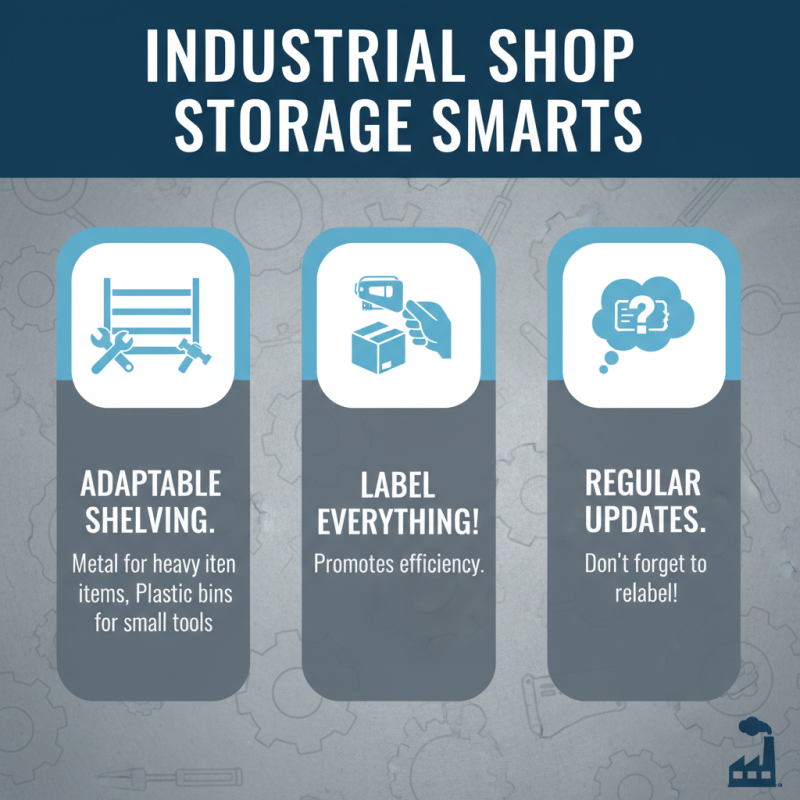
In an industrial shop, effective storage solutions are crucial for organizing equipment and inventory. A well-organized space saves time and reduces stress. Consider shelving units that can adapt to different equipment sizes. Metal shelves can hold heavy items, while plastic bins can keep smaller tools secure. Labeling each container promotes efficiency; however, it's easy to forget to update labels.
Storage is not just about space. It's also about the layout. Aisle width needs careful consideration to ensure smooth movement. Sometimes, too many items clutter the work area. Regularly assess what you really need and let go of the rest. This practice encourages a more functional workspace.
Don't overlook the importance of a digital inventory system. Tracking items digitally can help reduce human error. However, technology isn't infallible. Machines can malfunction, and software can have glitches. Regular audits can help catch these issues early, allowing for swift corrections. Staying organized is a continuous effort, requiring commitment and sometimes hard decisions.
Maintenance and Repair Tools: Keeping Industrial Equipment in Top Shape
Maintaining industrial equipment is crucial for every business. Regular maintenance can reduce equipment downtime by up to 30%, according to a recent report by the Manufacturing Institute. Repair tools play a vital role in this process. They ensure machines operate smoothly. Simple tools like wrenches and screwdrivers often get overlooked. However, they are essential for daily maintenance tasks.
Investing in quality maintenance tools can save money long-term. A well-stocked toolbox minimizes the need for hiring external services. In fact, studies show that businesses that prioritize in-house equipment maintenance often see a 25% increase in operational efficiency. Technicians need access to reliable tools for unexpected repairs. A missing tool can lead to delays and increased costs. Proper training on these tools also matters. Employees must know how to use them effectively.
Taking care of equipment is not just about fixing it when broken. It involves regular checks, cleaning, and preventive measures. Many industries still ignore preventative maintenance. This leads to larger issues down the line. Research indicates that companies that neglect maintenance face a 40% rise in repair costs. Emphasizing maintenance and repair tools can fundamentally change a business's outlook on productivity and safety.