Why is Industrial Machinery and Equipment Essential for Modern Manufacturing?
Industrial machinery and equipment play a vital role in modern manufacturing. They enhance production efficiency and improve product quality. Without these tools, manufacturing processes would be slow and inconsistent. The reliance on industrial machinery shapes how industries function today.
In recent years, advancements in technology have transformed these machines. Automation and precision tools have increased output. However, the integration of industrial machinery presents challenges. Workers must adapt to new technologies, which can be daunting. Training and investment are necessary for effective implementation.
The importance of industrial machinery and equipment cannot be overstated. They reflect the growth of manufacturing capabilities. Yet, businesses must critically evaluate their reliance on machines. Balancing human labor and technology is crucial for sustainable development. The future of manufacturing will depend on how well we navigate these complexities.
The Role of Industrial Machinery in Enhancing Production Efficiency
In modern manufacturing, industrial machinery plays a crucial role in enhancing production efficiency. These machines streamline processes and reduce human error. For instance, automated assembly lines can produce components at a staggering pace. This not only saves time but also allows for more precise manufacturing. Workers can focus on quality control rather than repetitive tasks.
However, there is a need for continuous training. As machinery evolves, operators must keep up with new technologies. Regular maintenance is also essential. Machines require care to operate efficiently. Neglecting maintenance can lead to breakdowns that halt production. These interruptions can be costly and affect the supply chain.
Integrating advanced machinery is not without challenges. The upfront costs can be significant. Small manufacturers might struggle to invest in new technology. Yet, the long-term benefits can outweigh these initial investments. Improved efficiency leads to higher output and, ultimately, profitability. Balancing these factors is essential for sustainable growth in the manufacturing sector.
Types of Industrial Machinery Commonly Used in Manufacturing Processes
Industrial machinery plays a vital role in modern manufacturing. Various types of equipment are essential for different production processes. For instance, CNC machines are widely used for precision cutting and shaping materials. These machines improve accuracy and efficiency, making them a staple in factories.
Another common type of industrial machinery is conveyor systems. These systems are crucial for moving materials across the production line. They save time and reduce manual labor. However, they can sometimes lead to bottlenecks if not properly managed. It’s important for manufacturers to regularly assess their efficiency.
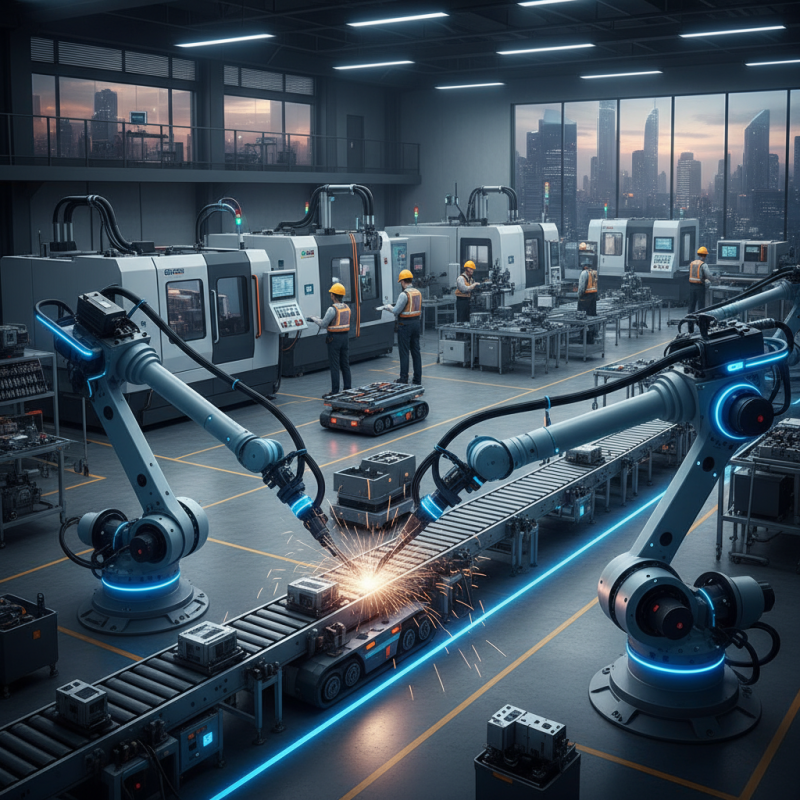
Robots have also become indispensable in manufacturing. They automate tasks such as welding, painting, and assembling products. While they enhance productivity, relying solely on automation can reduce human oversight. Balancing human and machine contributions is key to achieving optimal results. Each of these machinery types contributes uniquely to the manufacturing process, shaping the future of industry.
Impact of Industrial Equipment on Product Quality and Consistency
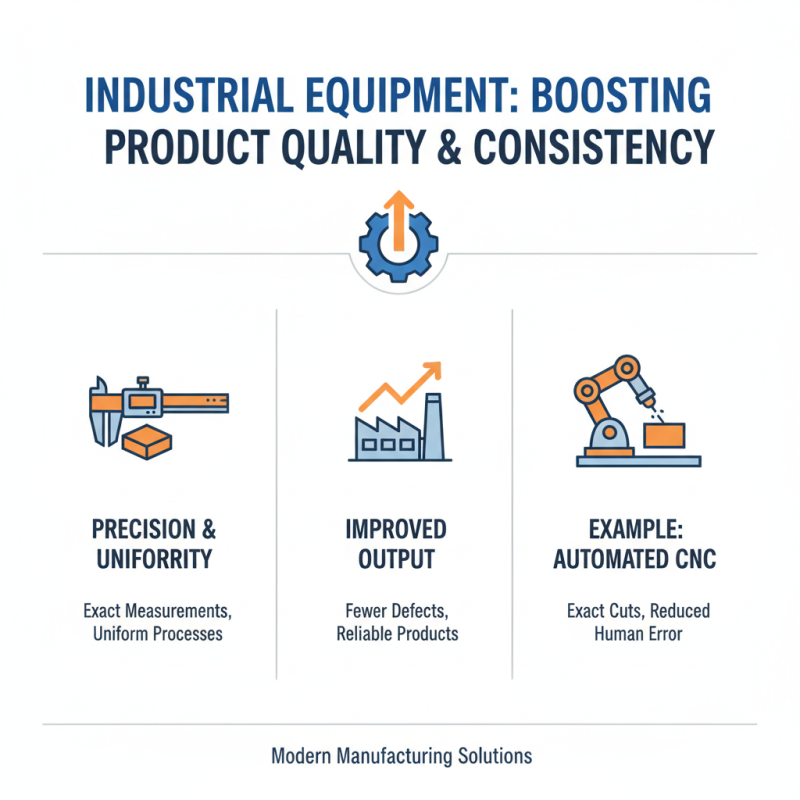
Industrial machinery and equipment play a vital role in ensuring product quality and consistency in modern manufacturing. These tools enable precise measurements and uniform production processes. A factory that utilizes advanced machinery often sees improvements in output. This means fewer defects and a more reliable end product. For instance, automated CNC machines can cut materials with exact dimensions, reducing human error.
Tips: Regular maintenance of machinery is crucial. Failures can lead to inconsistent quality. Workers should be trained to operate equipment effectively. Understanding the machine’s capabilities directly influences production standards.
Moreover, the integration of technology, like IoT sensors, can monitor equipment performance in real-time. This allows for quick adjustments to be made, enhancing consistency. However, reliance on technology also brings challenges. Machine malfunctions can disrupt production lines. Workers must be prepared to adapt when faced with unexpected issues.
Tips: Encourage a culture of feedback among staff. Their insights can highlight areas needing improvement in machinery use. A collaborative approach reduces errors and improves overall product quality.
Technological Advancements in Industrial Machinery and Their Benefits
Industrial machinery and equipment play a crucial role in enhancing the efficiency of modern manufacturing. With rapid technological advancements, these machines now integrate artificial intelligence and automation. This shift has transformed production lines, enabling manufacturers to optimize processes and reduce downtime significantly. Moreover, advanced machinery allows for precise quality control, minimizing defects and ensuring consistent output.
Tip: Consider investing in training for staff to operate new equipment properly. This can prevent errors and improve productivity.
The benefits of modern machinery extend beyond efficiency. They also foster innovation by allowing manufacturers to experiment with new materials and design concepts. These advancements can create bespoke products tailored to customer needs. However, adopting new technology comes with challenges. Integration can be complex, and not all workers may adapt quickly. Companies must ensure that their workforce is supported through these changes.
Tip: Encourage feedback from employees about new technologies. Understanding their challenges can help improve the adaptation process.
In conclusion, staying updated with industrial machinery trends is essential. Businesses that embrace modern equipment can enhance their competitive edge while fostering a culture of continuous improvement.
The Importance of Maintenance and Upgrades for Manufacturing Equipment
Industrial machinery and equipment play a critical role in modern manufacturing. However, the importance of proper maintenance and upgrades cannot be overstated. According to a report by the Association for Manufacturing Technology, companies can lose up to 20% of their production capacity due to equipment failures. Regular maintenance is essential to prevent these costly downtimes.
Upgrading machinery can also enhance efficiency and productivity. The National Institute of Standards and Technology (NIST) states that firms investing in technology upgrades see a 15% increase in output. Despite these facts, many manufacturers still overlook regular maintenance schedules. This negligence can lead to outdated machinery that hampers competitiveness.
Moreover, the cost of neglecting maintenance can escalate quickly. A study by Deloitte shows that delayed maintenance can result in repairs that are three to four times more expensive than proactive maintenance. Manufacturers must reflect on their practices to avoid losing ground in a competitive market. Investing in skilled technicians and regular equipment assessments can help sustain operations and drive long-term success.
Importance of Industrial Machinery and Equipment in Modern Manufacturing
This chart illustrates the key factors contributing to the essential nature of industrial machinery and equipment in modern manufacturing, focusing on the significance of maintenance and upgrades.