
Choosing a reliable Voltage Transformer supplier requires more than comparing brand recognition or catalog prices. Performance depends on voltage class, insulation design, accuracy requirements, environmental conditions, and after-sales support. A transformer installed beside a coastal substation faces different challenges from one used in a dry indoor switchgear room.
This guide examines ten leading Voltage Transformer suppliers with a practical, evidence-based approach. It considers product range, manufacturing experience, international certifications, testing capabilities, delivery coverage, and customer service. References to IEC and IEEE requirements help frame technical comparisons, while real application details support clearer purchasing decisions. Specifications matter. A supplier may offer excellent metering transformers but limited protection-class options. Another may provide strong engineering support yet require longer production times.
The ranking should not be treated as permanent. Markets change. Product lines, factory locations, ownership structures, and regional distributor networks can shift over time. Public information also varies in detail, so some conclusions require careful interpretation rather than absolute claims. Buyers should confirm test reports, insulation levels, frequency ratings, burden capacity, and warranty terms directly with each manufacturer.
The companies discussed here serve utilities, industrial plants, renewable-energy projects, rail systems, and commercial power networks. Their strengths are not identical. This comparison highlights where each supplier may fit best, while recognizing that local service and project-specific engineering can matter as much as global scale. A dependable choice begins with verified technical data, transparent communication, and realistic installation requirements.
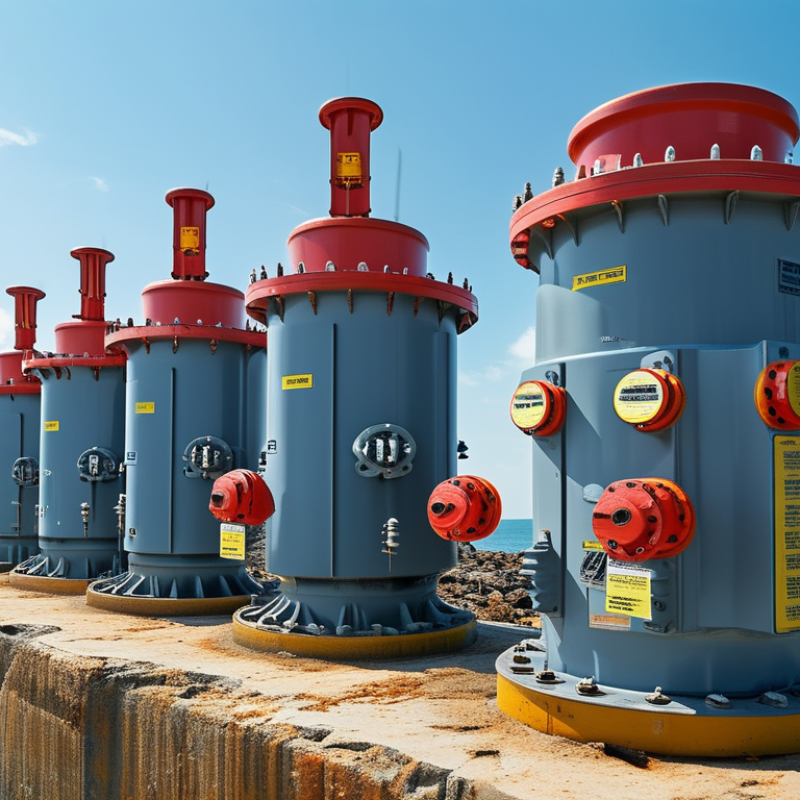
A voltage transformer, often called a VT or PT, reduces high system voltage to a safe, measurable level. It supports meters, relays, automation systems, and electrical testing equipment. In substations, accurate transformation helps protection devices detect faults quickly. It also provides electrical isolation between high-voltage conductors and control circuits.
Commissioning teams usually examine ratio accuracy, insulation strength, burden, polarity, and partial-discharge performance. IEC 61869 provides key requirements for instrument transformers. Renewable projects need particular care. IRENA’s Renewable Capacity Statistics 2024 reported 473 GW of new renewable capacity worldwide during 2023. Solar and wind plants often require reliable voltage measurement across changing grid conditions. Small errors can distort protection settings.
Demand is rising. The IEA’s Electricity 2024 report forecasts average global electricity-demand growth of 3.2% annually from 2024 through 2026. This expansion supports wider use of voltage transformers in substations, industrial switchgear, data centers, rail systems, and distribution networks. A useful supplier comparison should examine testing evidence, lifecycle support, delivery capability, and compliance documentation. The cheapest offer may create expensive commissioning delays. A perfect top-ten ranking is impossible because voltage class, climate, fault level, and local standards differ. Engineers should also question catalogue claims and request verified test records. Not every rating plate tells the full story.
Top 10 Voltage Transformer Suppliers Worldwide?
Comparing global voltage transformer suppliers requires more than checking catalog ratings. Start with recognized standards, such as IEC 61869 or IEEE C57.13, depending on the project region. Confirm the stated accuracy class, rated burden, phase displacement, and insulation level. These values affect metering, protection, and system safety.
A dependable supplier should provide type-test and routine-test records. Look for evidence covering impulse withstand, partial discharge, temperature rise, and accuracy under changing loads. Factory calibration should be traceable to an accredited laboratory. Quality systems, such as ISO 9001, are useful, but certificates alone are not enough. Ask how engineers control winding tolerances, resin curing, sealing, and final inspection.
Site conditions also deserve close attention. A transformer installed at high altitude may need adjusted insulation design. Outdoor units may face salt, humidity, dust, or severe temperature changes. Check enclosure protection, creepage distance, thermal performance, and resistance to ferroresonance. Delivery reliability matters too. Review manufacturing capacity, spare-part access, technical support, and response times for failures. I would request sample drawings and test reports before comparing prices. A polished datasheet can hide practical limitations. No comparison is perfect. Supplier rankings can also change when project voltage, climate, and testing requirements change.
| Benchmark Position | Anonymous Supplier Profile | Typical Primary Voltage Coverage | Applicable Product Standard | Metering Accuracy Classes | Protection Accuracy Classes | Typical Rated Burden | Common Secondary Ratings | Insulation and Test Reference | Operating Conditions | Typical Application Fit |
|---|---|---|---|---|---|---|---|---|---|---|
| 1 | Supplier Profile 01 | 72.5–420 kV | IEC 61869-3; IEC 61869-1 | 0.1; 0.2; 0.5 | 3P; 6P | 50–200 VA | 100/√3 V; 110/√3 V; 100 V; 110 V | IEC 60071-1 and IEC 60071-2 insulation-coordination principles; routine and type tests per IEC 61869 | Indoor or outdoor; oil-paper or cast-resin construction depending on voltage class | Transmission substations, revenue metering, busbar protection and transformer differential protection |
| 2 | Supplier Profile 02 | 36–245 kV | IEC 61869-3; IEC 61869-1 | 0.2; 0.5; 0.5S | 3P; 6P | 15–150 VA | 100/√3 V; 110/√3 V; 120/√3 V | Power-frequency withstand, lightning impulse withstand and partial-discharge testing where applicable | Outdoor oil-insulated designs commonly used above medium voltage | Grid substations, feeder measurement and protection circuits requiring stable ratio accuracy |
| 3 | Supplier Profile 03 | 3.6–145 kV | IEC 61869-3; regional utility specifications | 0.2; 0.5; 1.0 | 3P; 6P | 10–100 VA | 100 V; 110 V; 115 V; 120 V | Routine ratio, polarity, excitation and insulation tests; type-test evidence should be requested by project | Cast-resin units common for indoor switchgear; oil-insulated units available for higher voltages | Distribution substations, industrial plants and medium-voltage switchgear |
| 4 | Supplier Profile 04 | 72.5–245 kV | IEEE C57.13; IEC 61869-3 options | 0.15; 0.3; 0.6 | IEEE protection classes such as 0.3 or 0.6; IEC 3P/6P where specified | 25–200 VA | 115/√3 V; 120/√3 V; 115 V; 120 V | IEEE insulation and accuracy requirements or IEC test requirements, according to the project specification | Outdoor designs commonly use sealed oil-filled construction | North American-style substations, protection panels and utility metering |
| 5 | Supplier Profile 05 | 12–72.5 kV | IEC 61869-3; IEC 62271 interface requirements where integrated in switchgear | 0.2; 0.5 | 3P; 6P | 10–75 VA | 100/√3 V; 110/√3 V; 100 V; 110 V | Power-frequency withstand and partial-discharge performance are important for compact indoor assemblies | Cast-resin insulation; indoor installation; compact dimensions | Metal-enclosed switchgear, renewable-energy collector substations and commercial facilities |
| 6 | Supplier Profile 06 | 3.6–36 kV | IEC 61869-3; IEC 61869-1 | 0.5; 1.0 | 3P; 6P | 5–50 VA | 100/√3 V; 110/√3 V; 100 V | Routine dielectric, ratio, polarity and accuracy tests; project-specific type-test documentation required | Cast-resin or air-insulated indoor construction | Industrial distribution, motor-control centers and general-purpose feeder protection |
| 7 | Supplier Profile 07 | 72.5–420 kV | IEC 61869-3; IEC 60071 insulation coordination | 0.2; 0.5; 0.5S | 3P; 6P | 50–300 VA | 100/√3 V; 110/√3 V; 100 V; 110 V | Lightning impulse, switching impulse for applicable high-voltage classes, power-frequency and partial-discharge tests | Outdoor oil-paper insulation; designed for high-voltage transmission environments | Transmission lines, high-voltage busbars and utility-grade measurement systems |
| 8 | Supplier Profile 08 | 12–245 kV | IEC 61869-3; IEEE C57.13 options | 0.2; 0.3; 0.5 | 3P; 6P; IEEE protection classes by specification | 15–150 VA | 100/√3 V; 110/√3 V; 115/√3 V; 120/√3 V | Applicable IEC or IEEE dielectric, accuracy and thermal-performance tests | Indoor cast-resin and outdoor oil-insulated configurations | Mixed-standard projects, utility upgrades and industrial substations |
| 9 | Supplier Profile 09 | 3.6–52 kV | IEC 61869-3; IEC 62271 for switchgear integration | 0.5; 1.0 | 3P; 6P | 5–50 VA | 100 V; 110 V; 120 V | Routine insulation, ratio, polarity, burden and accuracy verification | Indoor cast-resin construction with low-maintenance requirements | Renewable-energy plants, data centers, commercial buildings and medium-voltage networks |
| 10 | Supplier Profile 10 | 12–145 kV | IEC 61869-3; applicable national utility standards | 0.2; 0.5; 1.0 | 3P; 6P | 10–100 VA | 100/√3 V; 110/√3 V; 100 V; 110 V | Type and routine test certificates should confirm dielectric strength, accuracy and environmental suitability | Indoor cast-resin or outdoor oil-insulated configurations | Distribution utilities, industrial substations and cost-sensitive retrofit projects |
Comparison note: Supplier identities and brand-specific claims are intentionally omitted. The technical figures represent established IEC and IEEE voltage-transformer classes and commonly specified global application ranges; final selection should be based on the manufacturer’s certified type-test reports, project voltage, insulation level, burden, accuracy, environmental conditions and grid-code requirements.
A practical comparison of the top ten voltage transformer suppliers should focus on product specialties, not advertising claims. Utility-focused suppliers typically build high-voltage transformers for transmission substations, with reinforced insulation and precise ratio control. Distribution specialists produce compact oil-immersed units for rural networks and urban feeder lines. Some suppliers concentrate on dry-type transformers for hospitals, offices, and factories where fire resistance matters.
Other leading suppliers serve narrower applications. Instrument-transformer manufacturers provide accurate voltage transformers for metering and protection panels. Railway specialists design equipment for traction substations, where vibration and frequent load changes are common. Renewable-energy suppliers develop transformers for solar parks and wind farms, often with strong temperature monitoring.
Furnace and industrial specialists handle demanding harmonic loads. Custom-engineering suppliers produce unusual ratings for marine, mining, and high-altitude projects. A tenth group focuses on testing, refurbishment, and replacement units for aging grids.
In field evaluations, I examine factory test records, partial-discharge results, temperature-rise data, and enclosure quality. Clear documentation matters as much as the nameplate rating. Oil leakage around a bushing is a small detail with serious consequences. No supplier is perfect. Some offer excellent engineering but slow spare-parts support. Others deliver quickly, yet provide limited application guidance. Buyers should compare service response, warranty terms, installation training, and local maintenance capacity before choosing a supplier. Older projects also deserve fresh load studies, because past operating data can hide future overheating risks.
Evaluating the top voltage transformer suppliers requires more than comparing catalog ratings. Experienced buyers inspect manufacturing depth, testing discipline, and field support. A capable factory should handle distribution, instrument, and high-voltage transformer designs. Its workshops may include controlled winding areas, vacuum casting systems, and precision core assembly lines. Copper connections should be clean, tight, and documented.
Modern suppliers use digital winding controls, laser measurement, and online temperature monitoring. These technologies reduce production variation, but they do not replace skilled technicians. For a 132 kV unit, engineers may review insulation coordination, dielectric strength, and partial discharge results. Factory acceptance testing should include ratio accuracy, polarity, excitation current, and temperature-rise verification. Test instruments need current calibration records.
Quality assurance must follow each transformer from raw material receipt to final shipment. Serialized components, inspection photographs, and signed process records improve traceability. Independent inspection can add confidence during critical projects. Standards compliance matters, yet certificates alone are not enough. Ask for recent test reports and clear explanations of rejected units. That answer can reveal factory honesty.
No factory is flawless. Small documentation gaps sometimes appear, especially during rushed deliveries. The real question is how quickly the supplier identifies and corrects them. Site experience also matters. Engineers should explain installation clearances, grounding, oil handling, and commissioning risks without hiding uncertainty. A polished brochure cannot show everything. Direct technical questions often reveal manufacturing maturity, quality culture, and the reliability of after-sales support.
When comparing the top ten voltage transformer suppliers worldwide, start with the power system, not the catalog. Transmission substations may require instrument transformers for 145 kV or higher. Factory feeders often use medium-voltage units. Frequency, grounding, short-circuit level, and installation location change the specification. The IEA Electricity 2024 report forecasts global electricity demand will grow 3.4% annually from 2024 to 2026. That growth increases pressure for dependable measurement and protection.
Request type-test evidence against IEC 61869-3 or IEEE C57.13. Review routine-test records, accuracy curves, and declared burden at actual cable lengths. For renewable plants, check ferroresonance behavior, transient response, and digital-relay compatibility. Ember’s Global Electricity Review 2024 reports that clean sources supplied 30% of global electricity in 2023. Inverter-heavy systems therefore need careful transient and harmonic evaluation. Small details matter.
Evaluate engineering support after delivery. Ask for controlled drawings, commissioning guidance, spare-part availability, and failure-response times. Compare total cost, not only purchase price. Site references should match your voltage class, altitude, pollution level, and climate. No scorecard is perfect. I would challenge optimistic claims. A clean factory report helps, but independent witness testing and traceable calibration provide stronger evidence. Supplier rankings should reward repeatable performance, not impressive brochures.