
What Are the Top Types of Industrial Machine Equipment?
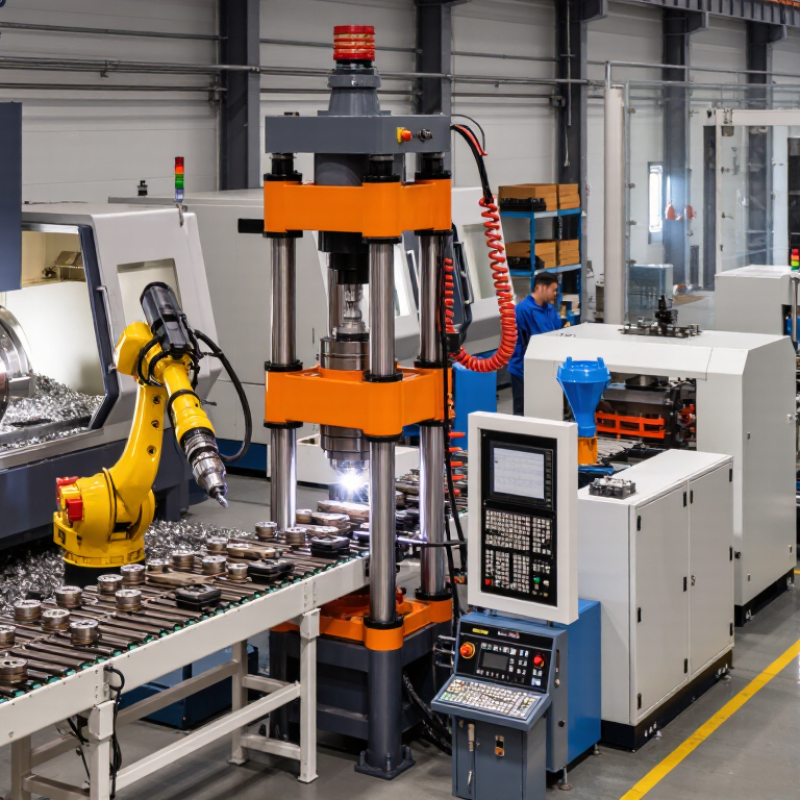
Industrial machine equipment forms the working backbone of modern production. It cuts metal, shapes polymers, moves materials, controls temperature, and supports repeatable assembly. Inside a busy factory, a CNC machine may remove thin layers of steel while conveyors carry parts toward robotic stations. Nearby, compressors, presses, pumps, and inspection systems keep the line moving.
The main types include machining equipment, forming machines, material-handling systems, industrial robots, packaging machines, and process-control equipment. Each category serves a different production need. CNC mills support precise cutting. Hydraulic presses apply controlled force. Injection molding machines create consistent plastic components. Conveyors reduce manual handling and improve workflow. Sensors and programmable controls help operators monitor speed, pressure, temperature, and quality.
Taiichi Ohno, the engineer widely associated with the Toyota Production System, said, “Without standards, there can be no improvement.” His point remains practical for industrial machine equipment selection. A machine should match the material, output volume, accuracy target, available space, energy plan, and maintenance skills of the facility. The cheapest option may create expensive downtime. The most advanced option may exceed the real need.
That judgment is not always simple. Even experienced managers can overlook cleaning access, operator training, or spare-part availability. Small details matter. A difficult-to-reach filter can delay production for hours. This guide examines the leading equipment types, their applications, strengths, limitations, and selection factors. It also considers safety, reliability, automation, and long-term operating value. The goal is not to praise technology blindly, but to help readers make practical, evidence-based decisions.
Industrial Machine Equipment: Definition, Purpose, and Core Functions
Industrial machine equipment refers to powered systems that perform production, processing, movement, or maintenance tasks. These machines convert energy, materials, and operator instructions into controlled physical results. A cutting machine may remove metal, while a forming press changes its shape through force. Their purpose is practical: improve consistency, reduce manual strain, and maintain output under demanding conditions.
The top types include CNC machines, industrial robots, material-handling equipment, pumps, compressors, and forming machines. CNC equipment cuts, drills, or mills components with programmed accuracy. Robots handle repetitive assembly, welding, or palletizing tasks. Conveyors and lifting systems move products between workstations. Pumps transfer liquids, while compressors supply controlled air for tools and actuators. Forming equipment bends, stamps, or presses materials into usable parts.
Core functions usually include motion control, material transformation, measurement, and process protection. Sensors monitor temperature, pressure, position, and vibration. Controllers adjust machine behavior when readings change. Guards, emergency stops, and maintenance access support safer operation. In a working factory, a small vibration can signal bearing wear before a costly shutdown. Experience shows that equipment selection is rarely simple. One machine may handle several roles, and the best choice depends on load, speed, floor space, skill levels, and maintenance support. Specifications can look convincing on paper. Real production conditions may disagree. Regular inspections, clear operating procedures, and accurate service records help turn machine capacity into dependable performance.
| Equipment Type | Main Category | Primary Purpose | Core Functions | Typical Materials or Media | Common Industrial Applications | Key Performance Measures |
|---|---|---|---|---|---|---|
| CNC Machine Tools | Manufacturing and machining | Produce precise components by removing material according to computer-controlled instructions. | Cutting, drilling, milling, turning, boring, threading, and contouring. | Metals, engineering plastics, composites, and selected ceramics. | Automotive components, aerospace parts, industrial machinery, medical devices, and general fabrication. | Dimensional accuracy, repeatability, spindle speed, feed rate, tool life, and material removal rate. |
| Industrial Robots | Automation and material handling | Perform repetitive, hazardous, or highly consistent production tasks with programmable motion. | Welding, assembly, pick-and-place, palletizing, painting, dispensing, and machine tending. | Components, containers, assemblies, coatings, adhesives, and packaged goods. | Automotive manufacturing, electronics, logistics, metalworking, food processing, and packaging. | Payload, reach, positional repeatability, cycle time, availability, and safety performance. |
| Conveyors | Material handling | Move materials, parts, packages, or bulk products between processing and storage points. | Transporting, accumulating, sorting, elevating, indexing, and feeding materials. | Boxes, pallets, parcels, parts, grains, aggregates, powders, and packaged products. | Warehousing, distribution, mining, food processing, manufacturing, and parcel handling. | Throughput, conveying speed, load capacity, energy consumption, belt or chain life, and uptime. |
| Compressors | Fluid power and process utilities | Increase the pressure of air or gas for machinery, tools, and process operations. | Compression, storage support, pressure regulation, drying, filtration, and distribution. | Compressed air, nitrogen, oxygen, natural gas, refrigerants, and other industrial gases. | Pneumatic automation, chemical processing, refrigeration, construction, energy, and maintenance operations. | Flow rate, discharge pressure, specific power, oil carryover, noise level, and operating efficiency. |
| Pumps | Fluid transfer | Transfer liquids and maintain the required flow or pressure within an industrial system. | Circulation, dosing, boosting, drainage, injection, loading, and process transfer. | Water, oils, fuels, chemicals, slurries, wastewater, and food-grade liquids. | Water treatment, chemical plants, oil and gas, agriculture, food processing, and utilities. | Flow rate, head pressure, efficiency, cavitation resistance, seal performance, and energy use. |
| Industrial Boilers | Thermal process equipment | Generate steam or hot water for heating, power generation, and industrial processing. | Fuel combustion, heat transfer, steam generation, pressure control, and condensate recovery. | Water, steam, natural gas, fuel oil, biomass, and recovered process heat. | Food and beverage, chemical processing, textiles, paper production, healthcare, and district heating. | Thermal efficiency, steam capacity, operating pressure, emissions, fuel consumption, and safety integrity. |
| Heat Exchangers | Thermal management | Transfer heat between separate fluid streams without normally mixing them. | Heating, cooling, condensation, evaporation, heat recovery, and temperature control. | Water, steam, oils, refrigerants, process chemicals, gases, and thermal fluids. | Refining, chemical processing, HVAC, power generation, food production, and refrigeration. | Heat-transfer rate, temperature approach, pressure drop, fouling resistance, and thermal efficiency. |
| Industrial Mixers and Blenders | Process equipment | Combine materials to achieve a uniform composition, texture, or chemical formulation. | Blending, dispersion, homogenization, emulsification, kneading, and suspension. | Powders, granules, liquids, pastes, slurries, polymers, foods, and pharmaceutical ingredients. | Food processing, pharmaceuticals, chemicals, plastics, cosmetics, construction materials, and coatings. | Mixing uniformity, batch size, power consumption, cycle time, shear rate, and cleaning performance. |
| Presses and Forming Machines | Metal forming and fabrication | Shape, cut, compact, or assemble materials through controlled mechanical force. | Stamping, bending, punching, forging, compacting, drawing, and molding. | Sheet metal, billets, powders, plastics, rubber, and composite materials. | Metal fabrication, automotive parts, appliances, packaging, construction products, and powder metallurgy. | Forming force, stroke length, cycle rate, bed size, dimensional accuracy, and energy consumption. |
| Industrial Ovens and Furnaces | Heat treatment and thermal processing | Apply controlled heat to alter material properties or complete a manufacturing process. | Drying, curing, annealing, tempering, sintering, melting, and thermal sterilization. | Metals, ceramics, polymers, coatings, food products, composites, and electronic components. | Metal heat treatment, powder processing, coatings, ceramics, electronics, food production, and laboratories. | Temperature uniformity, maximum temperature, heating rate, atmosphere control, throughput, and energy efficiency. |
| Filtration and Separation Systems | Process purification | Remove suspended solids, contaminants, or selected components from liquids and gases. | Screening, clarification, particulate filtration, membrane separation, dust collection, and dewatering. | Water, wastewater, process liquids, compressed air, gases, dust, slurries, and chemical streams. | Water treatment, pharmaceuticals, food processing, chemical manufacturing, mining, and air pollution control. | Removal efficiency, flow capacity, pressure drop, particle size rating, media life, and maintenance interval. |
| Generators and Industrial Power Systems | Power generation and backup | Supply electrical power where grid power is unavailable, unreliable, or insufficient. | Mechanical-to-electrical conversion, voltage regulation, synchronization, load management, and backup operation. | Diesel, natural gas, biogas, renewable input, batteries, and electrical loads. | Factories, construction sites, data facilities, hospitals, utilities, mining, and emergency power systems. | Rated output, fuel efficiency, voltage stability, response time, emissions, runtime, and reliability. |
| Packaging Machines | Packaging and end-of-line automation | Fill, close, label, wrap, inspect, and prepare products for storage or distribution. | Filling, weighing, sealing, capping, labeling, cartoning, case packing, and palletizing. | Foods, beverages, medicines, chemicals, consumer goods, cartons, films, bottles, and containers. | Food and beverage, pharmaceuticals, cosmetics, chemicals, e-commerce, and consumer product manufacturing. | Packages per minute, fill accuracy, changeover time, material waste, reject rate, and equipment availability. |
| Note: Performance values and operating conditions vary by machine design, material, process requirements, and applicable safety standards. Equipment should be selected using verified manufacturer specifications and a site-specific engineering assessment. | ||||||
Related Posts
-
What is an Industrie Machine and How it Transforms Modern Manufacturing
-
How to Choose the Right Industrial Equipment for Your Business Needs
-

Exploring Innovative Examples of Industrial Supplies and Equipment for Modern Manufacturing
-
Why is Industrial Machinery and Equipment Crucial for Global Trade?
-

Unlocking Efficiency: The Rise of Natural Gas Engines in Sustainable Transportation Solutions
-
Revolutionizing Oil Extraction: The Impact of Advanced Oil Well Machines on Production Efficiency and Safety