
What Is Tungsten Carbide Ceramic Used For?

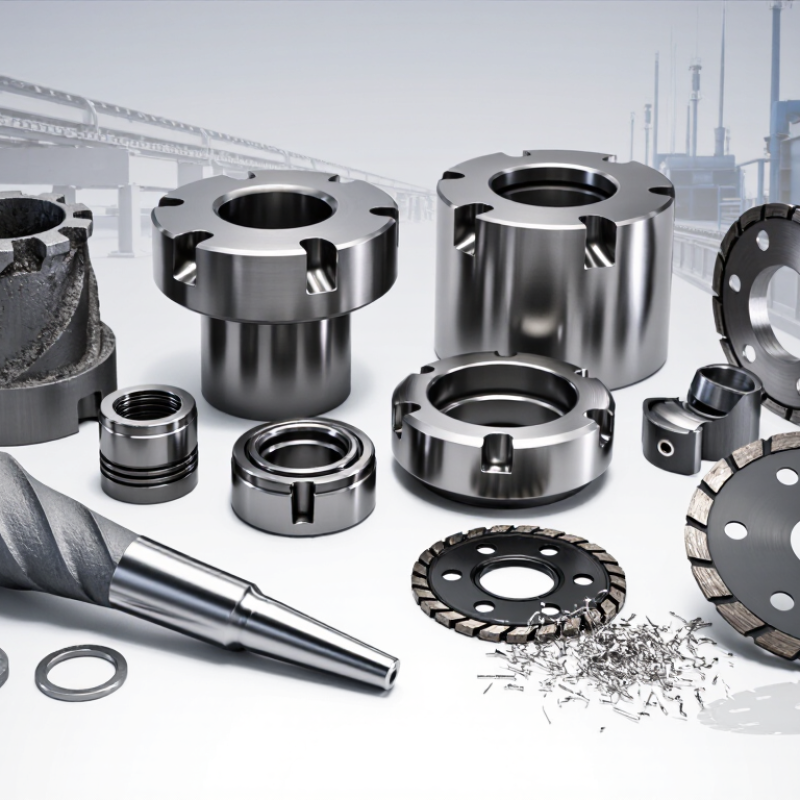
Tungsten Carbide Ceramic is built for places where ordinary steel wears away too quickly. Its dense, hard surface resists abrasion, erosion, and repeated contact. You may find it in mining nozzles, forming dies, seal rings, cutting tools, and wear plates. A small carbide insert can face rock dust, metal friction, and high compressive loads for thousands of operating hours. That performance explains its value in demanding industrial environments.

The U.S. Geological Survey reported approximately 81,000 metric tons of global tungsten mine production in 2023. China supplied most of that volume, showing how strongly carbide manufacturing depends on a concentrated raw-material chain. Grand View Research also identifies carbide products as important within the wider advanced ceramics and tooling markets. However, market figures vary between reports. Definitions are not always consistent, so readers should check each study’s scope before comparing forecasts.

Dr. D. M. Shanmugam, a recognized hardmetals researcher, described cemented carbide as offering “hardness with useful toughness.” That balance remains central to Tungsten Carbide Ceramic selection. Hardness alone is not enough. Poor binder control, thermal shock, or incorrect surface finishing can cause premature failure. Engineers therefore examine grain size, cobalt content, porosity, temperature, and impact conditions before specifying a grade. The best choice is rarely the hardest one. Real service records often reveal details that laboratory numbers miss. This article explores where Tungsten Carbide Ceramic is used, why it performs well, and where its limitations deserve closer attention.
What Is Tungsten Carbide Ceramic Used For?

What Is Tungsten Carbide Ceramic?

Tungsten carbide ceramic is a dense, engineered material made from tungsten carbide particles bonded with a metal, often cobalt or nickel. Although it is commonly called a ceramic, it behaves more like a ceramic-metal composite, or cermet. The carbide phase provides exceptional hardness, while the binder adds limited toughness. This balance gives the material strong resistance to abrasion, deformation, and high contact pressure.

It is not indestructible. Tungsten carbide can chip or crack when struck sharply, especially in thin sections or poorly supported parts. Its performance also changes with grain size, binder content, surface finish, and manufacturing quality. In practical inspection, a polished surface may look flawless while hidden pores weaken the component. That detail matters.

Manufacturers use tungsten carbide ceramic in cutting inserts, drilling components, wear plates, mechanical seals, nozzles, and forming dies. A slurry nozzle may resist constant particle impact, while a seal face can maintain a smooth surface during prolonged rotation. Mining tools often rely on its hardness against rock. However, material selection should consider shock, corrosion, temperature, and lubrication, not hardness alone. A harder grade is not always the better choice.

How Is Tungsten Carbide Ceramic Made?

What Is Tungsten Carbide Ceramic Used For?
How Is Tungsten Carbide Ceramic Made?
Tungsten carbide ceramic begins with tungsten oxide, carbon, and carefully controlled heat. Manufacturers first reduce tungsten oxide to metal powder. The powder is then carburized, usually between 1,300 and 1,600°C, to form tungsten carbide particles. Particle size matters. Finer powder can improve hardness, but it also makes handling and sintering more demanding.
Producers mill the powder, add temporary binders, and press it into shapes. Some parts are formed by uniaxial pressing, while complex components may use cold isostatic pressing. The compact then enters a vacuum or controlled-atmosphere furnace. During sintering, particles bond and shrink, often by 15–25% in volume. A small oxygen pickup can reduce performance. That detail is easy to underestimate.
Pure tungsten carbide is a ceramic material, although many industrial grades include cobalt or another metallic binder. Binder-free grades provide strong wear resistance and chemical stability. They suit seals, nozzles, cutting inserts, mining tools, and high-temperature fixtures. The International Tungsten Industry Association reports that cemented carbide consumes roughly 60% of global tungsten use. USGS data recorded worldwide tungsten mine production at about 78,000 metric tons in 2023. Supply remains concentrated, with China producing most of that total.
Quality control continues after sintering. Technicians inspect density, porosity, hardness, grain size, and fracture behavior. Sintering is not perfectly predictable. Warpage, residual stress, or uneven shrinkage can still appear, especially in large parts. Experienced producers adjust powder preparation and furnace cycles rather than relying on one fixed recipe.

What Properties Make It Useful?

What Is Tungsten Carbide Ceramic Used For?

Tungsten carbide ceramic is used where ordinary steel wears too quickly. Its main strength comes from extreme hardness, compressive strength, and resistance to abrasion.

9
The material can reach about 9 on the Mohs scale, close to diamond’s 10.
15.6 g/cm³
Its density is also high, near 15.6 g/cm³.

That weight feels noticeable in cutting tools and wear components.

The USGS Mineral Commodity Summaries 2024 estimated global tungsten mine production at 84,000 metric tons in 2023. This supply supports cemented carbide production for mining bits, metal-cutting inserts, wire-drawing dies, seals, and industrial nozzles.

Tungsten carbide also keeps its strength at elevated temperatures, although it is not indestructible. Sudden impact, poor cooling, or incorrect brazing can cause chipping. This is where practical experience matters. A harder material may still fail under shock.

Tips:

Select the grade according to load, speed, temperature, and abrasion. Fine-grained grades often provide sharper edges, while tougher grades better tolerate impact. Check the ISO 513 cutting-tool classification and the manufacturer’s test data before specifying a component. The International Tungsten Industry Association notes that recycling cemented carbide helps recover valuable tungsten, but recovery efficiency depends on collection and processing quality. Performance is not only about hardness. Design still matters.

What Are Its Main Industrial Applications?

What Is Tungsten Carbide Ceramic Used For?

Tungsten carbide ceramic, often called cemented carbide, combines tungsten carbide grains with a metallic binder. Its hardness resists abrasion, while its density supports stable cutting and forming. It is widely used in cutting inserts, milling tools, drill bits, wire-drawing dies, and precision punches.

In machining workshops, the edge can remove hardened steel while maintaining its shape under intense pressure. The material is not magic. Poor cooling or excessive impact can still cause cracking.

Mining and construction rely on carbide buttons in rock drills, trenching tools, and road-milling picks. These components face dust, vibration, and repeated contact with stone. Oil and gas equipment also uses carbide wear surfaces and nozzles, where erosion resistance matters.

According to the U.S. Geological Survey’s Mineral Commodity Summaries 2024, global tungsten mine production reached roughly 81,000 metric tons in 2023, with China supplying about four-fifths. That concentration shows why recycling and efficient tool design matter to industrial buyers.

The European Commission identifies tungsten as a critical raw material because of supply risk and industrial importance. Manufacturers therefore reclaim carbide from used tooling and production scrap. Reuse is valuable, but collection systems remain uneven.

Another limitation deserves attention: higher hardness can reduce toughness. Engineers must balance grain size, binder content, temperature, and impact load for each application. A tool that excels in continuous cutting may fail suddenly during interrupted machining. That trade-off is easy to underestimate.

What Are Its Advantages and Limitations?

What Is Tungsten Carbide Ceramic Used For?

Tungsten carbide ceramic is used where surfaces face severe wear, repeated impact, or abrasive particles. Common applications include cutting inserts, forming dies, mining tools, pump seals, and precision wear plates. Its hardness helps edges remain sharp while processing metals, stone, and composite materials. In a workshop, a carbide insert may cut thousands of parts before replacement becomes necessary.

Its main advantage is strong wear resistance. It also keeps useful hardness at elevated temperatures and resists many corrosive environments. The material has a high elastic modulus, so it can limit deformation under heavy loads. Very hard. However, hardness does not mean unlimited toughness. Tungsten carbide can chip when exposed to sudden impact, poor alignment, or vibration. Thin edges require careful handling.

The material is also dense, which increases component weight. Manufacturing can involve powder pressing, sintering, grinding, and diamond-based finishing. These steps demand experienced process control and can raise costs. Different binder contents and grain sizes change the balance between toughness and hardness. A finer grade may produce a sharper, more wear-resistant surface, but it can respond poorly to abuse. Engineers should examine load cycles, temperature changes, edge geometry, and maintenance conditions before selecting it. A useful lesson from field repairs is simple: many failures begin with an unsuitable design, not a weak material. It is not perfect.

What Is Tungsten Carbide Ceramic Used For? - What Are Its Advantages and Limitations?

Category Typical Information Practical Benefit Main Limitation or Consideration
Material composition Tungsten carbide, commonly represented as WC, is a hard ceramic compound made from tungsten and carbon. Engineering grades are often cemented with a metallic binder such as cobalt or nickel. The combination of a very hard ceramic phase and a tougher binder provides a useful balance of wear resistance and mechanical strength. Properties vary significantly with carbide grain size, binder content, porosity, and manufacturing method.
Hardness Cemented tungsten carbide commonly reaches approximately 1,300–2,200 HV, depending on grade and binder content. High hardness helps resist abrasion, scratching, deformation, and cutting-edge wear. Increasing hardness generally reduces toughness, making the material more sensitive to impact and edge chipping.
Density Typical cemented tungsten carbide density is approximately 14.0–15.5 g/cm³, while nearly pure WC is about 15.6 g/cm³. The high density can provide inertia, stability, and resistance to vibration in selected components. It is substantially heavier than steel, aluminum, and most oxide ceramics, which may increase handling and structural loads.
Compressive strength Typical cemented carbide grades can withstand compressive stresses of roughly 4–7 GPa, depending on composition and test method. It performs well in dies, punches, anvils, and wear parts exposed mainly to compressive loading. Tensile, bending, and impact loading must be carefully controlled because ceramic materials are less tolerant of flaws and stress concentrations.
Fracture toughness Typical cemented carbide fracture toughness is approximately 6–20 MPa·m1/2, with tougher grades generally having more binder and coarser carbide grains. Properly selected grades can tolerate moderate mechanical shocks better than many monolithic ceramics. It remains more brittle than most steels and can fail suddenly if chipped, cracked, or improperly supported.
Wear resistance Excellent against abrasive, sliding, and erosive wear when the grade, surface finish, and operating conditions are properly matched. Longer service life and more consistent dimensions in high-wear components. Adhesive wear, corrosion, thermal shock, or impact can still cause premature damage.
Cutting and machining tools Used for inserts, milling cutters, drill bits, turning tools, mining tools, and woodworking blades. Maintains a hard cutting edge at elevated temperatures and supports high production rates. It may chip under interrupted cuts, severe vibration, or incorrect cutting conditions.
Wear components Used for nozzles, bushings, seals, bearings, valve parts, guide components, slurry-handling parts, and forming dies. Low wear rates can improve dimensional stability and reduce maintenance frequency. The component may require a steel housing, brazed joint, shrink fit, or other support to manage brittleness.
Oil and gas applications Used in selected downhole wear parts, flow-control components, drilling elements, and erosion-resistant parts. Resists abrasive particles and high contact stresses in demanding service environments. Grade selection must account for corrosion, temperature, pressure, impact, and compatibility with the surrounding materials.
Chemical and corrosion behavior Tungsten carbide has good resistance to many corrosive and abrasive environments, but the binder phase may corrode in certain acids, oxidizing solutions, or wet conditions. Can provide reliable service where both wear and chemical exposure are present. Binder chemistry, fluid composition, temperature, and electrical potential can strongly affect corrosion performance.
Thermal performance WC has high thermal conductivity compared with many technical ceramics; cemented grades commonly fall around 50–110 W/m·K, depending on binder content and structure. Heat can be transferred away from a cutting edge or contact zone relatively effectively. Rapid temperature changes can cause thermal cracking, and high-temperature oxidation may limit unprotected use in air.
Manufacturing and finishing Common processes include powder pressing, sintering, grinding, electrical discharge machining, and selected coating or joining operations. Near-net-shape forming can reduce material waste, while diamond grinding can produce precise surfaces. Grinding and finishing are slower and more expensive than machining many steels; specialized tooling and process control are often required.
Overall advantages and limitations Key advantages include exceptional hardness, strong compressive performance, excellent wear resistance, dimensional stability, and useful thermal conductivity. It is especially effective for high-wear, high-pressure, and precision applications where service life is more important than low weight or easy machining. The main limitations are high density, high processing cost, brittleness, sensitivity to impact and thermal shock, and possible binder corrosion.

Note: Property ranges are representative values for cemented tungsten carbide and can vary with carbide grain size, binder content, porosity, test method, and service conditions.