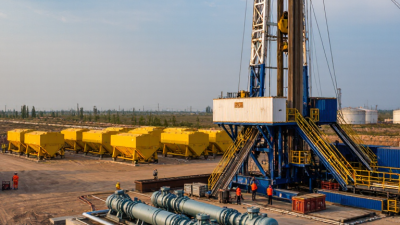
An industrial pump and machine is essential equipment in many production environments. It moves liquids, gases, or slurries through controlled systems. Factories use these machines to transfer water, fuel, chemicals, oil, food ingredients, and wastewater. A pump may appear simple, yet its performance depends on careful engineering.
Inside a processing plant, a pump can draw liquid from a storage tank and deliver it to a reactor. Another model may circulate cooling water around hot machinery. Some pumps handle thick sludge, while others move clean fluids at high pressure. Their roles vary widely. So do their designs. Centrifugal pumps suit many continuous-flow applications. Positive displacement pumps often provide accurate movement for viscous or sensitive materials. The right choice depends on flow rate, pressure, temperature, fluid properties, and operating conditions.
This guide explains what an industrial pump and machine does, where it is used, and how key components support reliable operation. It also considers maintenance, energy use, safety controls, and common selection errors. Small details matter. A worn seal can cause leakage. Poor alignment can increase vibration and energy consumption. No pump is perfect for every facility. A simplified explanation may overlook real operating pressures or changing fluid conditions. Practical decisions should therefore involve qualified engineers, manufacturer data, and site-specific inspections. Clear records, routine monitoring, and timely servicing can prevent avoidable downtime. The goal is not merely to move fluid. It is to support stable, efficient, and responsible industrial processes.
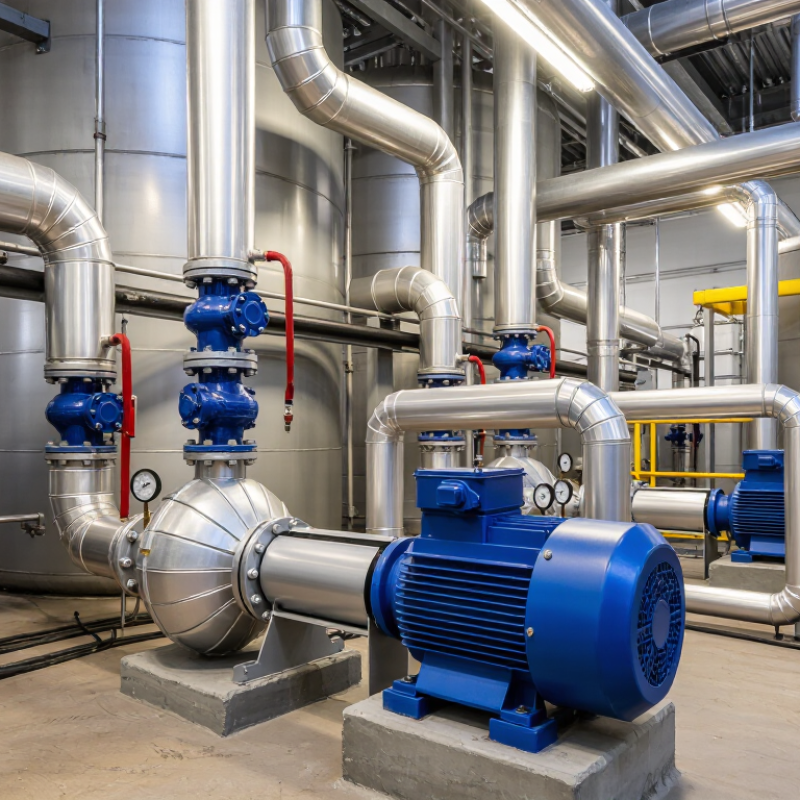
An industrial pump is a machine that moves liquids through controlled pressure and flow. It converts mechanical energy from a motor into hydraulic energy. Common duties include transferring water, fuel, chemicals, slurry, and heated process fluids. A pump may feed a boiler, drain a mine, circulate cooling water, or maintain pressure in a production line.
The machine is more than an impeller inside a casing. A working pumping system includes the pump, motor, coupling, valves, pipes, seals, sensors, and control drive. Each part affects reliability.
The U.S. Department of Energy reports that pumping systems can represent 25–50% of industrial facility electricity use. This figure explains why correct sizing matters. An oversized pump may throttle constantly, waste energy, and accelerate valve wear. An undersized pump may struggle to meet production demand.
Field inspections often reveal simple clues: a hot bearing, irregular vibration, or air bubbles near the suction line. These signs can indicate poor alignment, cavitation, blockage, or inadequate maintenance.
A pressure gauge alone can mislead. Flow, temperature, vibration, and power readings should be reviewed together. The Hydraulic Institute’s pump standards emphasize testing, application accuracy, and operating conditions. Yet real plants are rarely perfect. Old pipework and changing production loads complicate calculations. Engineers should record actual duty points, not rely only on original drawings. Good pump selection is therefore both a technical decision and an ongoing measurement process.
Industrial pumps are machines that move liquids through pipes, tanks, filters, and process equipment. Their working principle is practical: an impeller adds velocity, while the casing converts velocity into pressure. Positive-displacement pumps behave differently. They trap a measured volume and push it forward. That distinction matters when handling thick fluids, dosing chemicals, or maintaining stable flow.
In operating plants, pump control usually combines speed adjustment, valves, sensors, and feedback software. A pressure sensor can detect falling line pressure near a filling station. The controller then changes motor speed, reducing excess flow and avoidable throttling. The U.S. Department of Energy’s Improving Pumping System Performance sourcebook reports that pumping systems may consume about 25% of industrial motor energy. That figure varies by facility. Still, it shows why control matters.
Maintenance teams check vibration, seal leakage, bearing temperature, and suction conditions during inspections. Cavitation sounds like gravel inside the casing. It can damage impellers quickly. ISO 14414 provides a framework for assessing pump-system energy performance, including flow, head, power, and operating conditions. Measurements are valuable, but field data is rarely perfect. A clogged filter or inaccurate gauge can distort conclusions. Engineers should compare readings across operating points, not trust one convenient number. A small correction in control logic may outperform an expensive replacement.
Industrial pumps transfer liquids, slurries, and chemicals through a plant. Industrial machines support related work, including compression, mixing, filtration, and vacuum generation. Centrifugal pumps suit large, steady flows, such as cooling water and boiler circulation. Positive-displacement pumps deliver controlled volumes at higher pressure. They handle oil, viscous fluids, and metering duties. Rotary lobe, screw, and gear pumps belong to this group. Diaphragm pumps are useful when leakage control and chemical resistance matter.
Small details matter.
Compressors raise gas pressure for instrumentation, pneumatic tools, and process equipment. Blowers move large air volumes at lower pressure, often in wastewater aeration. Mixers keep solids suspended inside tanks and reduce temperature differences. Vacuum pumps remove air or vapor during drying, packaging, and chemical processing. In practice, pump selection depends on flow, head, viscosity, temperature, solids content, and seal requirements. A pump that looks efficient on paper may fail with abrasive slurry.
The U.S. Department of Energy’s Pumping System Sourcebook indicates that pumping systems can represent about 25% of industrial electricity consumption. The International Energy Agency reports that electric motor systems use roughly half of global electricity, making maintenance and control important. Variable-speed drives can reduce throttling losses, but only when the operating profile supports them. Oversizing remains common. It often creates noisy valves, unstable flow, and unnecessary energy use. A practical assessment should compare measured flow, pressure, vibration, and operating hours, rather than relying only on catalogue ratings. The neat classification is useful, but real plants rarely behave so neatly.
Industrial pumps move liquids, slurries, and process fluids through demanding work environments. Industrial machines also mix, compress, filter, heat, or separate materials. Their value appears clearly in water treatment plants, where pumps transfer raw water, chemicals, and treated wastewater. Operators depend on stable flow, controlled pressure, and equipment that tolerates continuous operation.
Manufacturing plants use pumps to circulate cooling water, lubricants, and cleaning solutions. In food processing, hygienic pumps handle milk, sauces, and liquid ingredients without damaging texture. Chemical facilities require carefully selected materials because corrosive fluids can attack seals and internal parts. Mining operations often pump abrasive slurry containing sand, rock, and metal particles. That work is harsh. Wear happens quickly.
Energy facilities use industrial equipment for fuel transfer, cooling systems, boiler circulation, and emergency drainage. Construction sites may use portable pumps to remove groundwater from excavations. Engineers normally review viscosity, temperature, pressure, flow rate, and contamination before choosing a machine. Maintenance teams then inspect vibration, seals, bearings, and unusual noise. A small leak may indicate a larger alignment problem. In practice, no pump selection is perfect. Actual site conditions can differ from design data, and this is where careful monitoring matters. Personally, I would rather specify modest capacity with reliable control than chase maximum output without enough maintenance planning.
What Is an Industrial Pump and Machine Used For?
An industrial pump moves liquids through pipelines, tanks, filters, and processing equipment. These machines handle water, chemicals, oils, slurries, and other process fluids. Selection starts with accurate flow and pressure requirements. Check viscosity, temperature, particle size, and operating hours before choosing a pump. Material compatibility also matters, especially with corrosive fluids. Do not size equipment from flow rate alone. A perfect selection rarely exists. Real operating conditions can differ from design data.
During operation, technicians should monitor discharge pressure, motor current, vibration, temperature, and seal leakage. Unusual noise may indicate cavitation, blockage, air entry, or bearing wear. Cavitation often sounds like gravel inside the casing. Keep suction lines short and properly supported when possible. Maintenance should follow measured conditions, not only a calendar. Inspect seals, couplings, valves, and strainers regularly. Isolate electrical power before service, and confirm zero pressure in the system. Small oversights become expensive failures.
Tips: Record normal readings during stable operation. Use these readings as a practical baseline. Clean strainers before they restrict flow. Check alignment after moving equipment. Review maintenance records with operators, because they notice changes early. If a pump repeatedly loses performance, investigate the system instead of replacing parts immediately. The pump may be blamed unfairly.
This chart uses the centrifugal pump affinity laws, with the rated operating point normalized to 100%. For a fixed impeller diameter, flow varies approximately with speed, head varies with the square of speed, and power varies with the cube of speed. Actual performance also depends on system resistance, efficiency, fluid properties, cavitation margin, and the manufacturer's certified pump curve.