What Are Natural Gas Engines and How Do They Work?

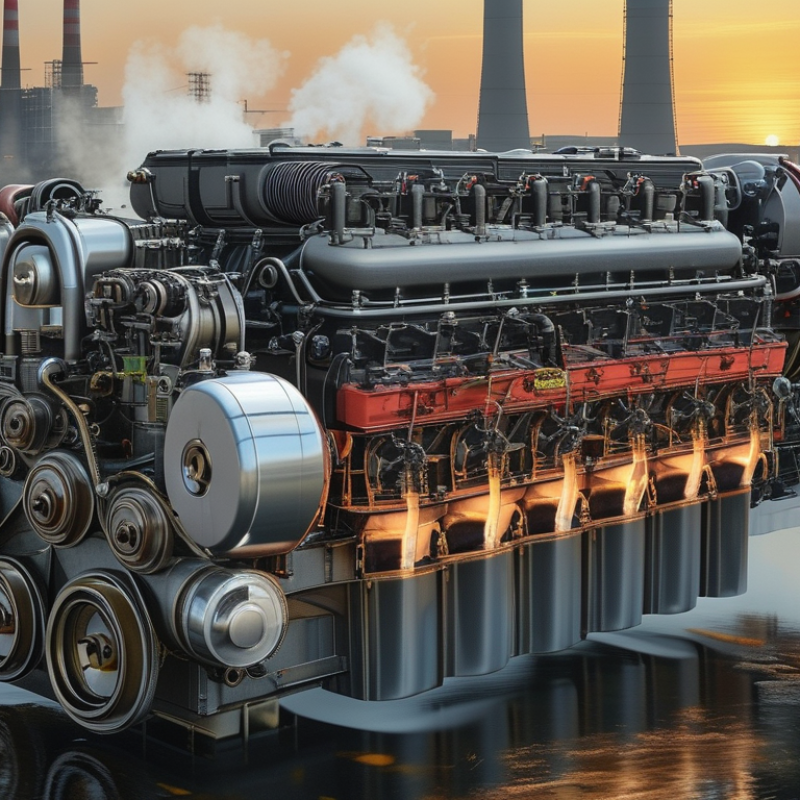
Natural gas engines convert the chemical energy in methane-rich fuel into mechanical power. They appear in power plants, trucks, ships, compressors, and backup generators. Unlike gasoline engines, many natural gas engines use spark ignition, similar to a large industrial automobile engine. Others use dual-fuel systems, combining natural gas with a small amount of diesel for ignition.

The operating cycle is familiar. Air and fuel enter the cylinder, compression raises their temperature, and a spark begins combustion. Expanding gases push the piston downward. The connecting rod transfers that movement to the crankshaft. Exhaust gases then leave through the valve system. Simple in principle. Demanding in practice.

As MIT engine specialist John B. Heywood has noted, “The internal combustion engine will remain important for many decades.” That observation helps explain the continuing interest in natural gas engines. They can offer lower particulate emissions and reduced carbon dioxide emissions than comparable coal or diesel systems, depending on fuel quality, engine design, and operating conditions. They may also respond quickly when electricity demand changes.

Still, the technology is not flawless. Methane leakage can weaken its climate advantage, especially when supply chains are poorly controlled. Maintenance matters too. Worn spark plugs, incorrect air-fuel ratios, or excessive cylinder temperatures can reduce efficiency and reliability. Real-world performance often differs from laboratory figures.

This article examines how natural gas engines work, why industries use them, and where their limits appear. It also considers efficiency, emissions, fuel storage, maintenance, and future alternatives. A balanced view is necessary. Natural gas engines are useful, but they are not a universal solution.
What Are Natural Gas Engines and How Do They Work?

What Natural Gas Engines Are and What Makes Them Different

What Are Natural Gas Engines and How Do They Work?

What Natural Gas Engines Are and What Makes Them Different

A natural gas engine converts methane-rich fuel into mechanical power through controlled combustion. Most systems mix gaseous fuel with air before sending it into the cylinders. A spark then ignites the mixture, pushing the pistons and turning the crankshaft. The process resembles gasoline combustion, but the fuel arrives as a gas rather than a liquid.

That difference affects the entire engine system. Natural gas needs pressurized storage tanks, special regulators, and carefully designed fuel lines. Many engines use spark ignition, while some heavy-duty designs use a small amount of pilot fuel for ignition. Natural gas also has a high octane rating, which can support efficient operation at suitable compression levels. However, engine calibration remains critical. Poor control can increase methane slip, meaning unburned gas leaves through the exhaust.

The operating environment matters more than a brochure may suggest. Technicians may inspect tank pressure, valve condition, ignition components, and exhaust sensors during routine service. Cold weather can reduce starting performance if pressure regulation is inadequate. Refueling access can also limit practical use, especially for vehicles traveling beyond established infrastructure. Natural gas engines often run quietly and produce fewer certain pollutants than conventional diesel engines, but they are not automatically cleaner in every situation. Leakage across production, transport, and fueling can change the environmental result. Real-world performance can disappoint when maintenance, fuel quality, or duty cycles receive too little attention.

Natural Gas Engine Efficiency and Direct CO₂ Emissions

Natural gas engines commonly use spark ignition to burn a methane-rich fuel-air mixture and convert combustion energy into mechanical power. Higher electrical efficiency produces more electricity from the same fuel input and reduces direct CO₂ emissions per kilowatt-hour. The chart uses representative efficiency scenarios of 35%, 40%, and 45%; emissions are calculated from the IPCC default natural-gas emission factor of 56.1 kg CO₂ per gigajoule and exclude upstream methane leakage.

The Main Components and Fuel Systems of Natural Gas Engines

Natural gas engines burn methane-rich fuel to produce mechanical power. Most use spark ignition, similar to gasoline engines, but their fuel system requires tighter pressure control. Inside the engine, pistons move within cylinders while valves manage air and exhaust flow. Spark plugs ignite the compressed mixture. The crankshaft then changes piston movement into rotation. Cooling passages control heat, and lubrication protects bearings and cylinder walls. These parts work together, although real operating conditions can make the process less predictable.

The fuel system begins with a storage tank or a pipeline connection. Compressed natural gas passes through a shutoff valve, filter, and pressure regulator. The regulator lowers tank pressure before fuel reaches the injector rail or mixer. Electronic injectors meter gas into the intake air, while sensors help adjust the mixture. Some systems use liquid natural gas, which needs a vaporizer before combustion. Clean filters matter. A blocked filter can reduce power and create unstable operation. Fuel leaks are uncommon in well-maintained systems, but inspection remains essential.

Tips: Check hoses, valves, and connections for wear during scheduled service. Follow the engine maker’s pressure limits and ventilation requirements. Keep ignition parts clean and properly gapped. Do not rely only on sound or smell; sensors may reveal problems earlier. Technicians should record pressure readings, exhaust temperature, and fault codes. A simple maintenance log helps identify gradual changes, though it may not explain every failure.

How Natural Gas Is Mixed, Ignited, and Converted Into Power

What Are Natural Gas Engines and How Do They Work?

How Natural Gas Is Mixed, Ignited, and Converted Into Power

Natural gas engines burn a gaseous fuel, usually containing a high proportion of methane. Before combustion, a pressure regulator reduces the gas pressure to a usable level. An injector then meters the fuel into the intake air. In older systems, a mixer performs this task mechanically. Modern controls respond to airflow, temperature, oxygen content, and engine speed. The goal is a stable air-fuel mixture, not simply more fuel.

The mixture enters the cylinder as the piston moves downward. During compression, a spark plug ignites the charge near the top of the stroke. The burning gases expand rapidly and push the piston down. This movement turns the crankshaft, which can drive a generator, pump, or vehicle drivetrain. The timing matters. A spark that arrives too early can cause knock, while late ignition wastes useful pressure. Small errors matter.

The timing matters.

In practical operation, natural gas engines are less tidy than diagrams suggest. Gas quality can vary, and cold starts may produce uneven combustion. Sensors and control software adjust fuel delivery, but they cannot correct every mechanical problem. Regular checks of plugs, valves, filters, and exhaust readings help maintain reliable performance. Lean mixtures may reduce fuel use and some emissions, yet they can also increase misfire risk. A well-tuned engine converts chemical energy into useful power with fewer visible particles, but its efficiency still depends on temperature, maintenance, load, and careful calibration.

Different Types of Natural Gas Engines and Their Applications

What Are Natural Gas Engines and How Do They Work?

Natural gas engines burn a methane-rich fuel mixture inside cylinders. Air and fuel enter the combustion chamber, where ignition releases energy. The expanding gases push pistons, turning a crankshaft. This motion can drive wheels, pumps, generators, or compressors. Fuel quality, pressure, and moisture affect performance more than many new users expect.

Spark-ignition engines are common in passenger vehicles, buses, and small power systems. A spark plug ignites the compressed mixture at a controlled moment. Stoichiometric versions use carefully balanced air and fuel, often with exhaust treatment. Lean-burn engines use extra air, reducing peak combustion temperatures and fuel consumption in suitable conditions. They need accurate monitoring, though. A small calibration error can increase emissions or cause unstable operation.

Dual-fuel engines use natural gas as the main energy source and a small pilot fuel for ignition. They suit heavy trucks, ships, and large generators that need strong torque and flexible operation. Stationary natural gas engines often support hospitals, factories, farms, and district heating systems. Combined heat and power units capture engine heat for water or buildings. In practical installations, technicians check spark plugs, filters, valves, and exhaust temperature regularly. Pipeline gas may be convenient, but remote sites often require compressed or liquefied storage. No design is perfect. Methane leakage, changing gas composition, and storage costs still require careful engineering.

Environmental Benefits, Limitations, and Maintenance Requirements

What Are Natural Gas Engines and How Do They Work?

Natural gas engines burn methane-rich fuel inside cylinders to create mechanical power. A spark usually ignites the compressed mixture. The expanding gases push pistons, turning a crankshaft and producing useful energy. In practical operation, these engines often run quietly and provide stable output. However, performance depends on fuel quality, pressure control, and accurate air-fuel mixing.

Environmental benefits are real, but they need careful measurement. Natural gas engines generally release less particulate matter and sulfur pollution than many liquid-fuel engines. They can also produce lower carbon dioxide emissions during combustion. They are not carbon-free. Methane leakage during extraction, processing, or delivery can reduce that advantage because methane strongly affects warming. Nitrogen oxide emissions may still require control equipment, especially under heavy loads. Fuel availability is another limitation. Remote sites may face expensive pipeline connections or storage demands.

Tips: Inspect ignition components, air filters, valves, and cooling systems at scheduled intervals. Check for gas leaks with approved detection equipment, never by using a flame. Keep records of oil condition, exhaust temperature, and vibration. These details can reveal problems early. In field maintenance, small changes often matter. A plan may look complete on paper, yet neglected sensors can cause poor combustion and higher emissions. Operators should follow qualified service guidance and local safety requirements, while reviewing whether the engine’s actual workload matches its design.

What Are Natural Gas Engines and How Do They Work? - Environmental Benefits, Limitations, and Maintenance Requirements

Data Dimension Typical Information How It Affects Operation, Environment, or Maintenance
Primary Fuel Natural gas, consisting mainly of methane (CH₄) The fuel is delivered through a gas supply system and mixed with air before combustion.
Basic Operating Principle Most natural gas engines use internal combustion with spark ignition. A spark ignites the compressed air–fuel mixture, producing expanding gases that drive pistons, a crankshaft, and usually an electric generator or mechanical load.
Four-Stroke Cycle Intake, compression, power, and exhaust The repeated cycle converts the chemical energy of methane into rotational mechanical energy.
Fuel Energy Content Methane has a lower heating value of approximately 50 MJ/kg. Actual energy delivered depends on gas composition, pressure, temperature, and the engine’s air–fuel control system.
Typical Electrical Efficiency Approximately 30%–45% for many stationary engine-generator systems Efficiency varies with engine size, load, operating speed, combustion design, and maintenance condition.
Combined Heat and Power Potential Overall fuel-use efficiency can reach roughly 70%–90% when useful exhaust and cooling heat are recovered. Heat recovery can substantially improve total energy utilization where there is a steady demand for hot water, steam, or process heat.
Carbon Dioxide Emissions Generally about 20%–30% lower than diesel combustion for the same useful energy output, depending on efficiency and operating conditions. The reduction results mainly from methane’s relatively high hydrogen-to-carbon ratio and, in many cases, efficient combustion.
Nitrogen Oxides (NOₓ) Can be lower than conventional diesel engines, especially with lean-burn combustion and suitable emission controls. NOₓ formation is influenced by combustion temperature, air–fuel ratio, ignition timing, and exhaust-treatment equipment.
Particulate Matter Usually very low compared with diesel engines. The gaseous fuel contains no diesel-style liquid spray, which generally reduces soot formation, although some particles may still be produced.
Unburned Methane Methane slip can occur through incomplete combustion, cylinder scavenging, or crankcase and exhaust pathways. Because methane is a powerful greenhouse gas, methane slip can reduce or offset part of the climate advantage of natural gas.
Renewable Gas Compatibility Some engines can use biomethane or renewable natural gas after appropriate gas-quality treatment. Compatibility depends on methane number, contaminants, moisture, pressure, and the engine’s fuel-system requirements.
Fuel Storage and Delivery The fuel may be supplied by pipeline or stored as compressed natural gas or liquefied natural gas. Storage systems require pressure management, leak detection, ventilation, and protection from ignition sources.
Key Environmental Benefit Lower particulate emissions and potentially lower CO₂ and NOₓ emissions than comparable petroleum-fueled engines. Benefits are greatest when the engine operates efficiently, methane leakage is controlled, and waste heat is utilized.
Main Infrastructure Limitation A dependable gas pipeline, compression system, or fuel-storage facility may be required. Sites without gas infrastructure may face higher installation costs and reduced fuel flexibility.
Fuel-Price Exposure Operating costs are closely linked to regional natural gas prices and supply availability. Long-term cost predictability depends on contracts, storage, market conditions, and local infrastructure.
Lubricating Oil Requirements Natural gas engines require dedicated lubricating oil selected for gas-engine combustion conditions. Oil condition and consumption should be monitored because combustion by-products, oxidation, and additive depletion can affect engine wear.
Routine Maintenance Inspection of oil, filters, spark plugs, belts, hoses, valves, ignition components, and safety systems Regular servicing helps maintain combustion quality, efficiency, reliability, and emissions performance.
Spark Plug Service Spark plugs require periodic inspection, cleaning, gap checks, and replacement according to operating conditions. Worn or contaminated plugs can cause misfires, reduced power, higher fuel consumption, and increased unburned methane.
Valve and Ignition Adjustment Valve clearances, ignition timing, and air–fuel controls need periodic verification. Incorrect settings may increase thermal stress, knock risk, emissions, and fuel consumption.
Cooling-System Maintenance Coolant level, quality, circulation, radiator or heat exchanger condition, and thermostat operation must be checked. Effective cooling prevents overheating and protects cylinder heads, valves, lubricants, and exhaust components.
Exhaust and Emission Controls Catalysts, oxygen sensors, crankcase ventilation, and exhaust piping may require inspection. Damaged or contaminated components can increase NOₓ, carbon monoxide, or methane emissions.
Gas-Safety Checks Leak testing, pressure checks, shutoff-valve testing, ventilation inspection, and detector verification These checks reduce the risk of fire, explosion, fuel interruption, and undetected methane release.
Overall Suitability Well suited to continuous or standby power, distributed generation, and combined heat and power where gas supply is reliable. The best application depends on load profile, local emissions rules, gas quality, heat demand, infrastructure, and maintenance capability.

Note: Values are typical general ranges or operating characteristics. Actual performance, emissions, service intervals, and fuel requirements vary with engine design, load, gas quality, local regulations, and operating conditions.