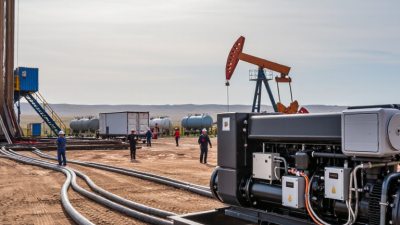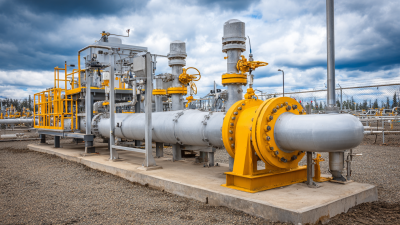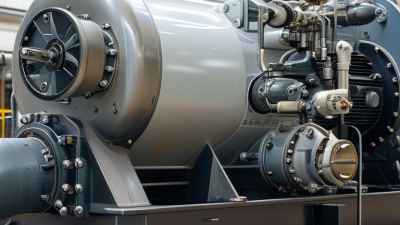
Choosing the right oilfield engines is a technical decision with global consequences. A drilling rig in Alberta faces freezing starts, while a workover unit in the Middle East may run through extreme heat and dust. The engine must deliver steady torque, fast load response, and dependable performance under pressure. Small differences matter.
Daniel Yergin, a respected energy historian, said, “The history of oil is the history of the world.” His observation also reflects the challenge of selecting oilfield engines for international operations. Equipment must fit local fuel quality, altitude, emissions requirements, maintenance skills, and available spare parts. A powerful engine is not automatically the best engine. Reliability is the real test.
This guide examines practical selection factors, including duty cycle, horsepower, cooling capacity, fuel efficiency, electronic controls, and service support. It also considers transport limits and the cost of downtime. A diesel engine that performs well at sea level may lose efficiency in high-altitude fields. A model designed for clean fuel may struggle with inconsistent fuel quality. These details are easy to overlook.
Field experience teaches caution. Specifications alone cannot predict every failure. No choice is perfect. Operators should compare verified test data, maintenance records, warranty terms, and local technician access before purchasing. The most suitable oilfield engines balance performance, durability, compliance, and long-term operating cost. That balance may look less impressive on paper, but it often protects production when conditions become difficult.
How to Choose the Best Oilfield Engines for Global Use?
Oilfield duties should be matched to continuous power, not peak horsepower. The IEA Oil 2024 report expects global oil demand to reach 105.4 million barrels per day by 2030. OPEC’s World Oil Outlook 2024 gives a higher 2035 forecast of 116 million barrels per day. These differing projections show why flexible equipment matters across regions and operating conditions.
Engines rated from 500 to 1,000 hp commonly suit workover units, cementing support, small drilling packages, and auxiliary hydraulic systems. They need reliable starts, compact installation, and strong low-speed torque. The 1,000–2,000 hp range fits medium land rigs, mud pumps, drawworks, and larger well-servicing systems. Cooling capacity becomes critical in desert heat. Above 2,000 hp, engines can support heavy drilling, high-pressure pumping, and large compression duties. These applications demand stable power under continuous load.
Do not trust the nameplate alone. ISO 3046-1 distinguishes engine ratings by operating conditions, including temperature, altitude, and duty cycle. A 2,000 hp engine may deliver less power at a high-elevation site. Fuel quality also changes maintenance intervals. I have seen selection sheets overlook filtration and local technician access. That mistake is expensive. A practical evaluation should compare rated power, transient response, emissions compliance, service intervals, enclosure design, and parts availability. A clean spreadsheet can still mislead. Test the engine against the real load profile.
Choosing an oilfield engine for global deployment requires more than comparing horsepower. ISO 3046-1 evaluates engine performance under declared conditions, including ambient temperature, altitude, fuel quality, and speed. ISO 8528, however, evaluates generating sets and their electrical performance. Ratings are not interchangeable.
The difference matters in remote drilling sites. An engine rated at 1,000 kW under ISO 3046-1 conditions may deliver less power at 40°C and 2,000 metres altitude. ISO 8528-1 also separates generator-set performance classes, from basic G1 applications to demanding G4 systems. Load acceptance, voltage stability, and frequency recovery become critical when pumps and compressors start suddenly. Altitude changes everything.
The IEA’s Oil 2024 report forecasts global oil demand reaching about 105.4 million barrels per day by 2029. This continuing activity increases demand for dependable mobile power, but the report does not prove that larger engines are always better. Selection should match duty cycle, not headline output. Compare corrected power, standby or prime rating, fuel consumption, cooling capacity, and maintenance intervals. Field teams should request test conditions in writing. A confusing point remains: some suppliers present ISO 3046-1 engine data beside ISO 8528 generator data, although the figures describe different performance boundaries. That comparison needs careful review.
How to read the chart: ISO 8528-1 defines operating categories for generating sets. Limited-time power (LTP) is restricted to a maximum of 500 operating hours per year, while emergency standby power (ESP) is restricted to a maximum of 200 operating hours per year. Continuous power (COP) and prime power (PRP) do not have a fixed annual operating-hour limit under the standard, so they are shown as having no fixed annual cap.
Selection guidance: For oilfield applications with extended and variable-load operation, PRP is generally the relevant rating category. COP is intended for constant-load operation. ESP and LTP should be reserved for standby or limited-duration duty. ISO 3046-1 provides the engine performance and reference-condition framework, while ISO 8528-1 classifies generator-set operating ratings.
Reference framework: ISO 3046-1 and ISO 8528-1. Rating limits may depend on the applicable edition, local regulations, and the engine-generator manufacturer’s declaration.
Choosing an oilfield engine begins with fuel reality, not brochure figures. Diesel is often practical where liquid fuel deliveries are reliable and storage is simple. Gas can reduce fuel costs when pipeline gas, associated gas, or compressed gas is consistently available. However, gas quality may change during production. That variation can affect ignition, power output, and maintenance intervals.
Target an efficiency range of 200–220 g/kWh at the engine’s normal operating load. Do not judge this figure at full load alone. A drilling site may run pumps, generators, and compressors at changing demands. Field assessments show that poor loading can increase actual consumption. A spreadsheet can mislead. Altitude, ambient temperature, fuel quality, and service skills also influence results.
Tips: Compare fuel price, delivery distance, storage capacity, and emergency supply options. Request performance data at 50%, 75%, and 100% load. For gas engines, verify pressure, methane content, and contaminant limits. For diesel engines, check cold-start behavior and filtration needs. Keep a fuel sample history.
A remote site may favor diesel during uncertain gas supply. A stable gas field may benefit from gas power and lower operating costs. Yet the cheapest fuel is not always the best choice. An engine with excellent laboratory efficiency may struggle without trained technicians. Specify local spare parts, diagnostic tools, and realistic maintenance access. Leave room for seasonal changes. The right selection balances measured efficiency with dependable operation.
Global oilfield operations demand more than high horsepower. An engine must meet Tier 4 Final, Stage V, or other regional emissions requirements. These standards can differ by country, machine category, and production date. Confirm the exact regulation before comparing equipment.
Request official emissions certificates, test reports, and conformity documents. Do not rely on a sales sheet alone. Check whether the engine uses diesel particulate filtration, selective catalytic reduction, or diesel exhaust fluid. These systems need correct temperatures, clean fuel, and trained maintenance. A unit compliant in North America may require different approval in Europe or another market. That detail is easy to miss.
Tips: Match the engine to altitude, ambient heat, load cycles, and fuel quality. Ask for cold-start data and regeneration requirements. Verify service access before shipment. A compact aftertreatment system may look attractive, but restricted airflow can create problems in dusty fields. Also confirm documentation for temporary imports, local inspections, and replacement parts. Compliance is not only a laboratory result; it must remain reliable during pumping, drilling, and long idle periods.
Field inspections often reveal a practical weakness: operators receive the engine, but not enough emissions training. That can lead to poor regeneration practices and unnecessary downtime. Build a maintenance plan with readable fault codes, approved fluids, and inspection records. No system is perfect. Recheck assumptions when operating conditions change.
Choosing the best oilfield engine for global use requires more than comparing horsepower. API 7K compatibility deserves careful review. API 7K applies mainly to drilling and well-servicing equipment, so an engine may not carry the certification itself. Request the certificate scope, package drawings, load data, and control-system records. Confirm that the engine, transmission, clutch, and driven equipment work together during sudden torque changes. A neat brochure is not enough.
Service support often determines real operating cost. Map authorized technicians, parts warehouses, and response times near each planned field. Ask whether technicians can troubleshoot electronic controls without remote assistance. Check parts availability for filters, sensors, starter motors, and cold-weather components. In remote regions, small delays become expensive.
Cold operation needs practical evidence. At -40°C, oil thickens, batteries lose cranking power, and seals become less flexible. Specify tested cold-start procedures, suitable lubricants, fuel heating, coolant heaters, insulated enclosures, and reliable battery systems. Request test records from a climatic chamber or an equivalent field environment. Some suppliers quote -40°C capability, yet only test the engine briefly. That gap matters. Inspect starting time, exhaust behavior, alarm accuracy, and warm-up performance after overnight exposure. I would also leave room for doubt: local fuel quality, altitude, and wind can defeat a perfect laboratory result. A short winter trial may reveal more than a confident specification sheet.
| Evaluation Dimension | Recommended Selection Target | What to Verify Before Purchase | Risk if Not Verified | Practical Rating |
|---|---|---|---|---|
| Oilfield application | Select an engine package designed for drilling, well servicing, fracturing, cementing, mud pumping, or auxiliary power duty. | Continuous-duty rating, transient-load response, duty cycle, ambient temperature range, altitude derating, and installation orientation. | Overheating, unstable speed, excessive fuel consumption, or reduced service life. | Essential |
| Power matching | Use a verified power and torque curve rather than relying only on the advertised peak horsepower. | Rated power, rated speed, peak torque, torque rise, governor response, and the driven equipment's peak demand. | Engine lugging, poor pump performance, driveline overload, or premature component wear. | Essential |
| API 7K compatibility | Treat API 7K compliance as a complete equipment-package requirement, not as an engine-only claim. | API 7K edition specified by the purchaser, equipment type, drivetrain interface, guarding, emergency shutdowns, controls, documentation, and package-level conformity evidence. | The engine may be suitable while the assembled drawworks, mud pump, rotary system, or well-servicing package remains nonconforming. | Mandatory verification |
| Cold-start capability at -40°C | Choose a package with documented starting and operating performance at -40°C when Arctic deployment is required. | Cold-start test conditions, battery technology, block heater, oil-pan heater, intake heating, fuel-heating system, coolant protection, and cranking limits. | No-start events, fuel waxing, lubricant thickening, battery failure, coolant damage, and extended downtime. | Mandatory for Arctic use |
| Lubricants and fluids | Specify low-temperature engine oil, fuel, coolant, and hydraulic-fluid requirements for the destination country. | Approved viscosity grades, minimum pour point, fuel-filter heating, coolant freeze protection, and local fluid availability. | Poor lubrication, restricted fuel flow, cavitation, seal damage, or failed cold starts. | High priority |
| Altitude and climate range | Select an engine with a published derating curve for the actual elevation, temperature, dust, humidity, and salinity. | Maximum operating altitude, high-temperature power correction, filtration arrangement, corrosion protection, and enclosure ventilation. | Loss of available power, overheating, filter blockage, corrosion, or shortened maintenance intervals. | High priority |
| Service-network coverage | Prioritize documented support coverage near the operating basin, port, or cross-border logistics route. | Local service locations, certified technicians, emergency response hours, spare-parts stock, mobile service capability, and escalation procedures. | Longer outages, higher freight costs, extended troubleshooting, and unavailable critical parts. | Mandatory verification |
| Spare-parts logistics | Use common consumables and maintain a planned inventory of high-failure and long-lead components. | Parts lead times, customs documentation, regional warehouses, interchangeability, minimum stock recommendations, and critical-part availability. | Unplanned downtime and excessive inventory or expedited-shipping costs. | High priority |
| Emissions and import approval | Match the engine's emissions certification to the destination country and the machine's mobile or stationary classification. | Applicable emissions stage, engine identification documents, conformity certificates, after-treatment requirements, and fuel specifications. | Import delays, operating restrictions, penalties, or inability to register the equipment. | Mandatory verification |
| Controls and shutdowns | Require integrated monitoring and fail-safe shutdown functions appropriate to the complete oilfield package. | Overspeed, low oil pressure, high coolant temperature, emergency-stop circuits, alarm history, remote monitoring, and control-system compatibility. | Equipment damage, unsafe operation, nuisance trips, or difficult fault diagnosis. | Mandatory verification |
| Maintenance interval and access | Choose an engine that allows routine service without removing major oilfield equipment. | Oil and filter intervals, valve-adjustment requirements, diagnostic access, drain points, lifting provisions, and service clearances. | Longer maintenance labor time, safety exposure, and missed preventive-maintenance tasks. | High priority |
| Noise, vibration, and packaging | Use a skid, coupling, exhaust, and enclosure design validated for the specific installation. | Mounting loads, torsional compatibility, alignment tolerances, exhaust back pressure, ventilation airflow, noise limits, and vibration levels. | Cracked mounts, coupling failure, excessive noise, poor cooling, or structural fatigue. | High priority |
| Total cost of ownership | Compare fuel use, scheduled maintenance, parts, technician travel, downtime, transport, and resale value. | Site-specific fuel consumption, warranty terms, overhaul cost, service labor rates, expected utilization, and downtime assumptions. | A lower purchase price may produce higher operating and downtime costs. | High priority |