What Are the Top Industrial Equipment Suppliers Worldwide?
Industrial equipment suppliers keep factories, mines, utilities, and construction sites moving. Their products range from pumps and compressors to machine tools, material-handling systems, and process controls. Yet “top” does not mean the same thing to every buyer. A food-processing plant may value washdown-ready motors and fast local service; a quarry may prioritize rugged components, available spare parts, and repair support. Small details matter. A failed seal or delayed bearing can interrupt an entire shift.
This overview examines widely recognized suppliers across major equipment categories, rather than naming one company as best for every application. It considers product breadth, manufacturing capability, geographic reach, technical support, and the clarity of published specifications. These signals can help narrow a shortlist, but they cannot replace a site assessment. Check duty cycles, operating conditions, compatibility, energy use, lead times, warranty terms, and service coverage before comparing quotations. Ask who handles commissioning and how quickly critical spares can arrive.
Supplier rankings deserve caution. Public information may emphasize strengths and overlook regional gaps, while performance depends on equipment configuration and distributor quality. That comparison is imperfect. This guide offers a starting point, not a purchasing verdict. Verify current product data with manufacturers and request references from similar installations. The right supplier is the one whose equipment, support, and lifecycle costs fit the job—not simply the name with the broadest catalog.
Define Industrial Equipment Suppliers by Product Segment and Market Scope
Industrial equipment suppliers should be defined by what they provide, not by a broad label alone.
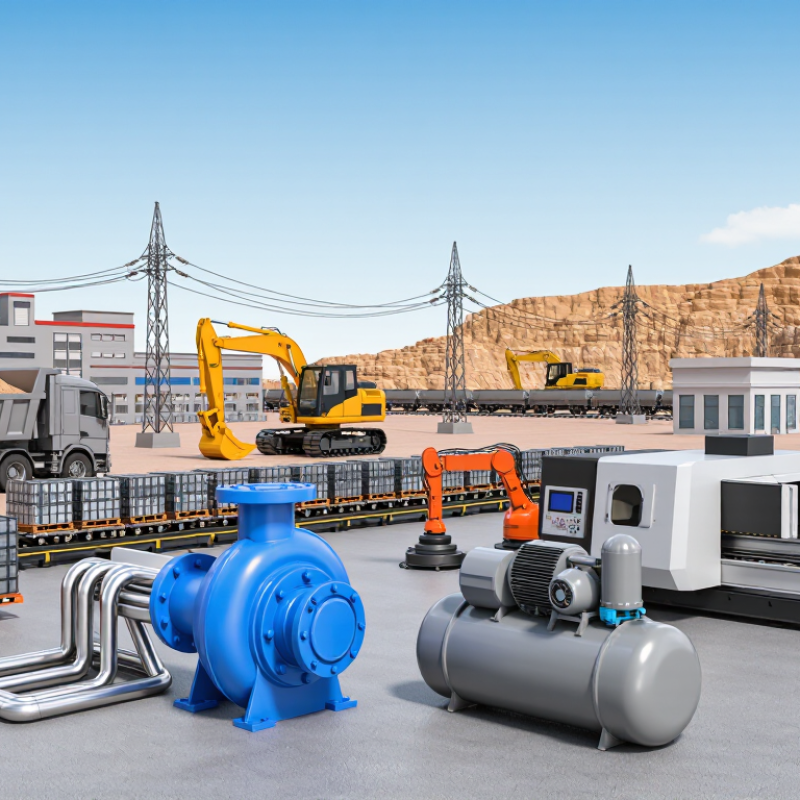
Product segments include material-handling systems, pumps and compressors, machine tools, process equipment, and measurement or control instruments. Some suppliers manufacture equipment; others distribute it, integrate multiple systems, or provide maintenance and replacement parts. These roles are not interchangeable. A warehouse conveyor supplier, for example, may design layouts and install controls, while a component distributor may focus on stocked motors and delivery speed. The distinction matters.
Market scope adds another layer.
A supplier may serve one industry, such as food processing, or support several sectors with adaptable equipment. Its reach may be local, regional, or international, but a wide delivery map does not guarantee nearby technical support. Buyers can check product specifications, installation records, service coverage, spare-parts access, and response times. Ask for details. A supplier’s stated capacity may not match a plant’s operating conditions, especially when loads, temperatures, or duty cycles differ. Even these categories can blur: a capable distributor may offer more practical engineering help than a small manufacturer. Compare evidence, not labels.
Identify Global Leaders Using 2023 Revenue and Annual-Report Data
A credible ranking of global industrial-equipment suppliers starts with comparable 2023 revenue, not reputation or product range. Audited annual reports are the strongest primary source: check reported industrial-equipment segment sales, reporting currency, and whether service income is included. Total corporate revenue can mislead when a supplier also operates in unrelated markets. Scope matters.
Market reports provide context, not a league table. Grand View Research estimated the global industrial machinery market at USD 668.7 billion in 2023, but its category spans different equipment types. The International Federation of Robotics reported 541,302 industrial robot installations worldwide that year, illustrating the scale of one specialized segment. These figures measure markets and installations, not supplier revenue. They should not be treated as interchangeable.
For a fair comparison, convert revenues using a consistent annual exchange-rate method, then disclose each company’s segment definition and fiscal year. Some reports combine machinery with automation, components, or maintenance; the resulting ranking is imperfect. That limitation deserves a note, not a quiet footnote. A useful shortlist therefore pairs 2023 segment revenue with annual-report disclosures and flags estimates where standalone equipment sales are unavailable.
Compare Automation Firms Against IFR’s 541,000 Robot Installations in 2023
IFR’s World Robotics 2024 report recorded 541,302 industrial robot installations worldwide in 2023, a 2% decline from 2022. Yet the global operating stock exceeded 4.28 million units. That is scale. For buyers comparing automation suppliers, these figures show a resilient market, not a guarantee that every factory needs more robots. Production volume matters, but so do uptime, safe integration, and access to skilled technicians.
Compare suppliers on measurable results, not impressive installation claims alone. Ask for documented cycle times, changeover performance, and service response targets in facilities like yours. A robot may move parts quickly, but a poorly planned cell can still leave workers waiting beside a stopped conveyor. Regional support and spare-parts availability also affect total cost over a system’s life. IFR’s figures provide useful context; they do not rank individual suppliers or predict your return on investment. That distinction is easy to miss.
Tips: Request a site assessment and a reference installation with similar products and shift patterns. Check how performance is measured after commissioning. Ask what happens when a critical component fails at 2 a.m. Then compare the answers, not just the equipment specifications. Some assumptions will be wrong. Test them before scaling.
Assess Global Reach Through Exports, Service Networks, and Installed Bases
Global reach is more than a map of export destinations. It depends on whether equipment arrives reliably and remains supportable after installation. Export records can show regular shipments across regions, but they do not reveal how quickly a supplier can replace a failed component. A machine may cross an ocean in days; a specialist part may take weeks. Distance matters.
Service networks deserve close inspection. Ask where technicians are based, which parts are stocked locally, and how emergency calls are handled across time zones. A local technician with diagnostic tools can reduce downtime on a production line. Response-time promises are useful, but check whether they apply outside major cities. Coverage can look broad on paper. The details may be less tidy.
Installed bases offer another practical signal. Equipment operating for years at several sites suggests experience with local conditions, operator training, and maintenance routines. Request references from facilities with similar workloads, not just the largest installations. Compare parts availability and service response against the cost of a stoppage. No metric is perfect; installed numbers can hide aging machines or uneven support. A careful assessment may still leave gaps, so record what the supplier cannot verify.
Evaluate Suppliers by Reliability, Safety, and Energy-Efficiency Standards
Choosing an industrial equipment supplier worldwide takes more than comparing prices or production capacity. Reliability should be judged through documented uptime, service response times, spare-parts availability, and maintenance requirements. Ask for operating data from equipment used in conditions similar to yours, including heat, dust, or continuous shifts. Downtime is costly. A polished case study may not reveal how performance changes after several years.
Safety deserves equally careful review. Check whether equipment meets standards relevant to its destination and intended use, and request clear operating procedures, guarding details, and training materials. Visit a facility or speak with current users when possible. Small details matter: an emergency stop that is easy to reach, or a filter that can be replaced without awkward lifting. Energy efficiency should be measured under realistic workloads, not just ideal test conditions. Compare power consumption, idle losses, and maintenance-related efficiency over the equipment’s expected life. Numbers need context. Suppliers may present data differently, so ask for test methods and assumptions. Even a thorough review has limits; site conditions and operator habits can change results. A sound choice balances credible evidence with practical support after installation.
What Are the Top Industrial Equipment Suppliers Worldwide?
Compare suppliers using documented reliability, safety, and energy-efficiency evidence—not brand rankings alone.
Energy-efficiency reference: The bars show nominal efficiency values for 7.5 kW, four-pole, 50 Hz motors by IE class, based on IEC 60034-30-1:2014. These are standard reference values, not supplier ratings. For a balanced assessment, also verify reliability evidence such as published service-life data and warranty terms, and check applicable machinery safety requirements, such as IEC 60204-1.